


















Right solutions...Right partner

Environmental Division Services

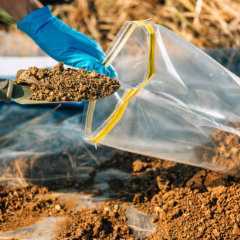
The ALS Environmental Division, employing over 2000 staff and with a worldwide footprint of over 40 laboratories, offices and service centres provides a full range of environmental analytical testing services. The Division specializes in the analysis of soil, sediment, water (raw, waste, drinking, catchment, recycled, saline, product), leachates, dust, air (indoor, stack, ambient), gas and biota.

The range of analytical services provided across the abovementioned matrices includes routine, trace and ultra trace level organics (volatile and semi volatile, herbicides, pesticides, PCBs and disinfection byproducts), metals and nutrients, inorganic non metallics, microbiological, biological, toxicological parameters, particle sizing and radio nucleotides.

Centres of Excellence across the division specialize in super ultra trace analysis specific to the semi conductor, electronics and pharmaceutical industries, the determination of specific organo metallics and current and emerging persistent organic pollutants (POPs) in various matrices.

Data derived from ALS Environmental Division Laboratories is typically used in the following applications:

  • Environmental baseline and compliance monitoring programs
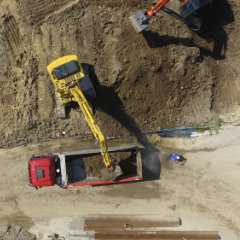
  • Site assessment and remediation
  • Sediment Assessment for dredging
  • Drinking, Catchment, Recycled and Desalination water monitoring
  • Occupational hygiene
  • Waste characterization
  • Other disciplines requiring a sophisticated analytical approach
Analysis methods are based on well-established, internationally-recognized procedures such as those published by the US Environmental Protection Agency (USEPA) and the American Public Health Association (APHA) as well as local country standards. R&D teams throughout the division are challenged and deliver on specific methodologies which may be unique to specific client applications.

Technical aspects aside, the Environmental Division is a Service Provider. Deliverables are tailored to meet the rigors of industry with Quality and On-Time Delivery prevailing. Standard deliverables include:

  • Real time on-line access to data (WebTrieveTM),
  • A wide range of industry accepted Electronic Deliverables (e.g. EQuIS, ESDAT, Excel and customized formats)
  • Electronic Secure Final Certificates
  • Quality Control Reports, Narratives and Invoices.
Individualized Project Management and Customer Contact Personnel; Monthly Project Tracking Reports; the provision of Sample Containers; and Sample Logistic Handling; round out the services provided by the Division.

Please contact your nearest laboratory location to discuss your analysis requirements or to request a price quotation.

Analytical Parameters & Packages
Commonly requested analyses are listed below. Additional analyses and services are available from ALS Environmental on request.

Physical Parameters
Inorganic (Non-Metallic) Parameters
Metals
Air & Industrial Hygiene Parameters
Gas Parameters (LNG, CSG)
Microbiological Parameters
Biological and Phycology Parameters
Organic Parameters (available in routine, trace and ultra trace)
Cleanliness & Contaminant Testing
Failure Analysis
Environmental Analysis

Physical Parameters
  • Colour
  • Conductivity
  • Hardness
  • pH
  • Salinity
  • Solids
  • Turbidity
  • Particle Sizing
  • Asbestos
Inorganic (Non-Metallic) Parameters
  • Acid Volatile Sulphide (AVS)
  • Acidity
  • Alkalinity Anions
  • Chemical Oxygen Demand (COD)
  • Cyanide (Cyanate, Free Cyanide, Weak Acid Dissociable Cyanide, Total Cyanide)
  • Oxyhalides
  • Chlorophyls
  • Surfactants
  • Nutrients (Nitrate, Nitrite, TKN, Phosphorous Compounds, etc.)
  • Sodium Adsorption Ratio (SAR)
  • Sulphur Compounds
  • Acid Sulphate Soils
  • Acid Mine Drainage
Metals
  • Metals (by ICP/AES)
  • Ultra Trace Metals (by ICP/MS and ORC-ICP/MS)
  • Ultra Ultra Trace Metals (by HR-ICP/MS)
  • Metals Speciation (by GC-ICP/MS, HR-ICP/MS, LC-ICP/MS)
Air & Industrial Hygiene Parameters
  • Alkanes (C1-C6)
  • Anions
  • BTEX & S
  • Dust fall Light Gases (O2, N2, CO, CO2)
  • Metals
  • PAH
  • Particulate
  • PCB
  • Dioxins/Furans Silica
  • TVOC
  • Volatile Organic Compounds
Gas Parameters (LNG, CSG)
  • Compositional Analysis (C1-C8)
  • CO2, 02, Benzene, H2S, N2
Microbiological Parameters
  • Coliforms: Faecal & Total
  • E.coli
  • Enterococci
  • Faecal Streptococci
  • Salmonella
  • Plate counts
  • Legionella
  • Pseudomonas
Biological and Phycology Parameters
  • Biochemical Oxygen Demand (BOD)
  • Blue Green Algae (Cyanobacteria)
  • Ecotoxicology
  • Total Algae
Organic Parameters (available in routine, trace and ultra trace)
  • Alcohols
  • Aldehydes
  • Amines
  • Alkylphenol Ethoxylates
  • Base-Neutral & Acid Extractables (EPA 625)
  • Bisphenol-A
  • BTEX & S
  • C1-C4 Gases in Water
  • Carbon (TOC, TIC, TC)
  • Carbamates
  • Catecols & Guaiacols
  • CCME PHC CWS (F1-F4)
  • Chlorinated Hydrocarbons
  • Chlorofluorocarbons (CFCs)
  • Chlorophyll & Phaeopigments
  • Conazoles
  • Dinitroanilines
  • 1,4-Dioxane
  • Dioxins/Furans
  • Diuron
  • Disinfection By-Products
  • Endocrine Disruptors
  • Ethoxylates
  • Explosives (Nitroaromatics, TNT, NTA, Perchlorate, Nitocellulose, etc.)
  • Extractable Petroleum
  • Fuel Additives (Tetraethylead, MTBE, etc.)
  • Fungicides
  • Geosmin/MIB
  • Glycols
  • Glyphosate and AMPA
  • Haloacetic Acids
  • Herbicides
  • Hydrocarbon Scan
  • LEPH/HEPH
  • Miscellaneous Organics
  • Monocyclic Aromatic Hydrocarbons (MAH)
  • Nitrosamines (e.g. NDMA)
  • Oil & Grease
  • Organo-Metallics
  • Organotins (TBT, DBT, MBT)
  • PBDEs
  • PCBs
  • Pesticides (OCP, OPP, etc.)
  • PFOS, PFOA and 6:2FTS
  • Phenolics: Chlorinated & Non-Chlorinated
  • Phenols
  • Phenoxy Acid Herbicides
  • Phenyl ureas
  • Phthalate Esters
  • Polychlorinated Biphenyls (PCB): Aroclors & Congeners
  • Polycyclic Aromatic Hydrocarbons (PAH)
  • Quaternary Ammonium Herbicides
  • Resin & Fatty Acids
  • Semi-Volatile Organic Compounds (SVOC)
  • Solvents
  • Thiocarbamates
  • Terpenes
  • Triazinones
  • Triazines
  • Volatile Organic Compounds (VOC)
Electronics & Consumer Services

The Electronic section provides services to three distinct sectors within the Electronics market:

Provision of services to the Disk Drive and Electronic industries for cleanliness analysis, contamination and failure analysis. Hard Disk Drive manufacturers constantly strive for higher areal density resulting in more stringent requirements for cleanliness. With dedicated and experienced analysts, ALS understands the industry and keeps pace with the latest test requirements to provide reliable and timely results.

ALS also services the market from an environmental perspective by specializing in RoHS, Halogen and other banned substances testing. The RoHS directive (2002/95/EC) was finalized by the European Parliament and the Council of the European Union on January 27, 2003. RoHS is an acronym for ‘Restriction of the use of Hazardous Substances’ in Electrical and Electronic Equipment. The regulation banned the use of certain substances in Electric and electronic equipment (EEE) sold from 1 July 2006

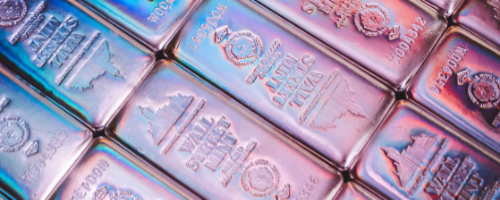
Finally, in addition to health, safety, and environmental considerations, materials in EEE are of interest for their economic value. Recycling process allow the recovery of elements such as iron, copper and aluminium, as well as precious metals like gold and silver. EEE waste may also contain more “exotic” metals such as indium and germanium.

Electronic laboratories are located in Singapore, Thailand, China and Sweden.

Determinations/Analysis and Services Offered
Cleanliness & Contaminant Testing

FTIR Microscope

To analyze and identify tiny and localized organic contaminants such as residues of flux, rosin and adhesives, which can cause poor electrical contact or corrosion spots.

GCMS

To analyze trace amounts of volatile and semi volatile organic compounds

  • Semi volatile organic compounds: Organic residues have the potential to cause various problems including bad contacts and corrosion. This analysis detects and identifies organic contaminants such as hydrocarbon or oil residue on casting and stamping alloy parts, flux residues, and adhesives.
  • Volatile organic compounds: When coupled with a Static or Dynamic Headspace setup, it is an excellent tool for analyzing potentially detrimental organic substances that outgas from polymers or adhesives at higher operating temperature.

Ionic Chromatography

To analyze trace amount of anions such as F, Cl, Br, SO4, NO2, NO3, PO4, and cations such as Li, Na, K, Mg, Ca, NH4. Ionic Contamination analysis can help to determine the cleaning efficiency of the process and track contaminants from handling, packaging and the raw material.

Liquid Particle Count

To measure the particles by suspending the sample in a liquid medium.

DI and Ultra pure Water testing

To perform sampling and testing of Ultra pure and DI Water for the following parameters:

  • TOC
  • Total Dissolved Silica (SiO2)
  • Total Bacterial Count
  • Trace Metals (including Zn, Fe, Cu, Al, Cr, Mn, Pb, Sn)
  • Ions (F, Cl, Br, NO2, NO3, PO4, SO4, Li, Na, K, Mg, Ca, NH4)
Failure Analysis

Temperature – Humidity Chamber

  • To provide temperature-humidity stress test or corrosion test.
  • Chambers ranges from –40degC to 140degC and 40% to 95%RH, voltage bias of up to +/-9V can be applied.

SEM EDX

To perform failure analysis or hard particle by a state-of-the-art Carl Zeiss FE SEM fitted with an Oxford EDX.

Environmental Analysis

ALS laboratories also provide banned substances testing to consumer products according to EU directives. The service covers:

  • EU RoHS compliance and other banned substances testing on EEE
    • Lead (Pb)
    • Mercury (Hg)
    • Cadmium (Cd)
    • Hexavalent chromium (Cr(VI))
    • PBB (polybrominated biphenyls)
    • PBDE (polybrominated diphenyl ethers)
  • Halogen free testing
  • Migration metals according to EN71-3 for toy safety
  • EU banned phthalates
  • REACH SVHC 16 banned substances
  • 16 Banned PAHs

ALS Specialty Electronics Laboratories have long experience in making full material declarations for EEE. Industry/manufacturer specific published lists of banned substances can be tested at ALS laboratories to certify that concentrations do not exceed applicable regulatory limits.

Services Overview
Quality Assurance
Locations
News
Careers
Downloads
Laboratory Finder
Global Websites

© 2004-2010 ALS Laboratory Group. All rights reserved | A Campbell Brothers Limited Company Contact UsLegal NoticePrivacy StatementSearch

Welcome to ALS Global Webmail
Click here for old webmail Click here for new webmail