






























Analysis of metals in stack emission samples

Sampling & analysis of metals in stack emission samples

Monitoring of metals in emission is important for several reasons. First and foremost, high levels of metals emitted into the environment can have a negative on the environment. Due to the potential for long range transport this environmental impact can happen at distances far away from the source.


Secondly, to follow local legislations and permits, monitoring of metals is frequently a requirement to ensure levels are below permit levels
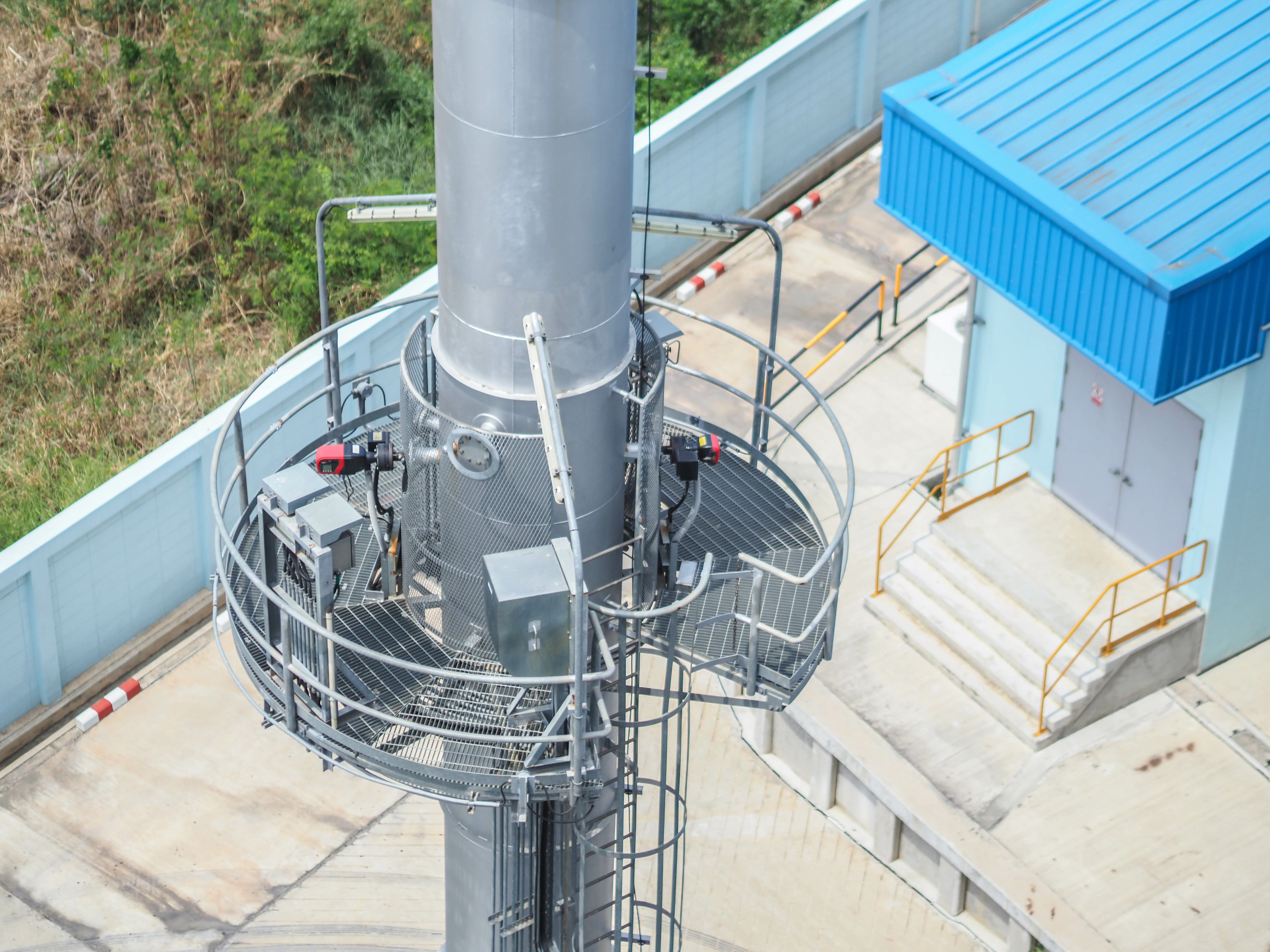

A metal staircase and platform surrounding a large metal pipe leads to a door on a building.

Analytical method & sampling procedure

Metals emissions are sampled using an impinger train that collects air drawn isokinetically from a stack sampling point. Particulates are collected on sampling probes and heated filters. The gaseous load is collected in an acidified hydrogen peroxide solution. This is effective for all metals except mercury, which is collected in an acidified potassium permanganate solution. Analysis is performed by ICP-OES/MS and AFS (mercury) using one of the following methods:

  • ISO 17294, ISO 11885, EN ISO 17852, EN 13211, EN 1483, US EPA 425 or ISO 16740.
gc-ms vial

Example of compounds, group of compounds or methods provided

Limit of quantification, in Impinger solution, for typical metals determined by this methodology are mentioned below.

Metal µg/sample
Aluminum (Al) 20
Antimony (Sb) 0.2
Arsenic (As) 1
Barium (Ba) 5
Beryllium (Be) 0.2
Bismuth (Bi) 0.5
Boron (B) 30
Cadmium (Cd) 0.1
Calcium (Ca) 500
Chromium (Cr) 1
Cobalt (Co) 0.2
Copper (Cu) 1
Iron (Fe) 200
Lead (Pb) 0.5
Lithium (Li) 0.5
Magnesium (Mg) 10
Manganese (Mn) 0.5
Molybdenum (Mo) 0.2
Nickel (Ni) 0.2
Phosphorus (P) 100
Potassium (K) 100
Selenium (Se) 2
Silicon (Si) 3000
Silver (Ag) 0.2
Sodium (Na) 30
Strontium (Sr) 0.2
Sulfur (S) 10000
Tellurium (Te) 6
Thallium (Tl) 0.2
Tin (Sn) 0.3
Titanium (Ti) 10
Tungsten (W) 6
Uranium (U) 0.3
Vanadium (V) 1
Zinc (Zn) 6
Chromium (VI) 0.3

Related services