






























Small-scale carbonization

Pilot-scale coke-making and coke test work is considered the gold standard for simulating the coal to coke transformation that occurs in commercial byproduct coke battery ovens. Unfortunately, the 400 kg sample mass required for a pilot-scale coke test may be difficult to obtain. In these circumstances a small-scale carbonization oven may suffice in providing indicative coke quality results. The small-scale carbonization test requires 10 kg per charge.
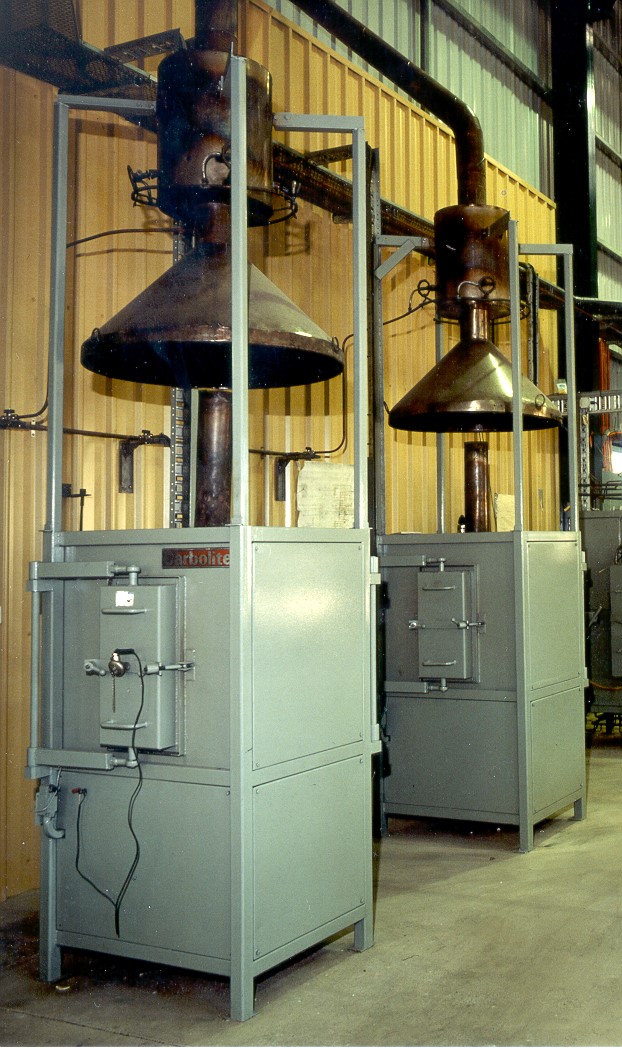
Fornos de pequena dimensão

Process overview

The small-scale coke-making process is a follows:

  • The coal is crushed to achieve a set top-size and the moisture of the charge is adjusted to a target value. The coal is the pack into a box at a set bulk density.
  • The box is pushed into the small-scale coke oven which had been prepared to a predetermined temperature
  • A temperature probe is inserted into the center of the coal charge.
  • The coked product is discharged from the coke oven 30 minutes after the center of the charge has attained a target temperature
  • The coke is quenched with water and dried in a fan-forced oven set at 110°C.
  • The dry coke is then weighed and stabilized. This provides information on coke yield.
  • The coke is then sub-sampled for analysis. As the sample mass is relatively small, coke testing is typically limited to Coke Reactivity Test (CRI, CSR). Coke Porosity may also be determined as well as routine coke analytical tests such as Proximate Analysis, Total Sulfur and Ash Chemistry.

Caveat: The width of the small-scale coke ovens is only 105 mm, compared to an industrial oven with a width of ~500mm. This limits the ability of these ovens to truly simulate industrial practices as a consequence of various heat transfer issues. Thus test-work is often required to benchmark the performance of the small-scale oven with the pilot-scale coke oven.

Control systems

During preparation of the sample for coke-making, all data is captured by ALS’ in-house laboratory information management system. This system is connected to all balances to ensure a there is a fully visible and auditable process. During coke-making, the oven wall temperatures are controlled by cRIO data management and data logging system controlling 3 solid state thyristors which in turn control 12 SiC elements per oven. Data from the wall and center temperatures, are captured by the cRIO data logging function. During coke testing, all data is again captured by the laboratory information management system. Coke analysis is typically tested as duplicates, with results falling outside standard repeatability limits being re-tested.

Laboratory support

Comprehensive coal characterization is typically required on the feed coal. This is typically sub-sampling prior to coke-making and processing the coal through ALS’ extensive laboratory network.

Related services