






























HPGR pilot plant testwork

In partnership with Köeppern Machinery Australia (KMA), ALS Metallurgy has available a state-of-the-art pilot HPGR unit at its Balcatta premises. The unit is available for bulk test work trials to determine specific HPGR design and operation parameters, or alternatively the HPGR can be used as a production unit to produce HPGR (“micro-cracked”) feed for downstream process assessment. This is a two-way commercial alliance, which means clients can approach KMA directly to commission HPGR testing at ALS. Or it may be more commercially appropriate or efficient to have the HPGR package included in a wider testwork program with ALS. Neither scenario is too onerous and ALS’s only objective to facilitate our clients’ HPGR crushing needs.
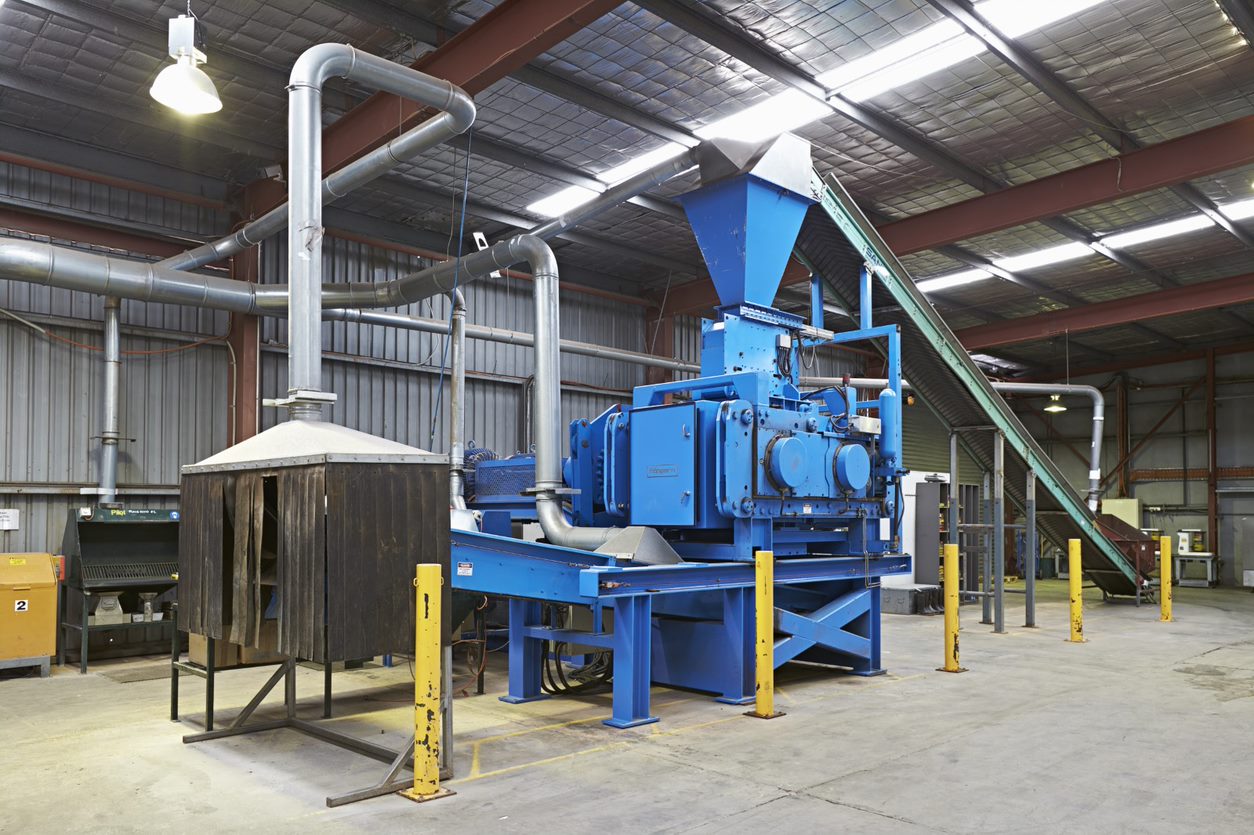
HPGR5

HPGR evaluation & engineering studies

The KMA HPGR unit located at ALS is a second-generation machine incorporating studded rolls of 1000mm diameter and 250mm width with nominal throughput capacity of 40tph on a continuous basis, which can reach a maximum rate of 60tph. Additionally, the HPGR is installed with a full SCADA system for accurate data capture at each stage of the HPGR process operation. To align with the ALS core value ‘Safety as a Priority’, as well as our comprehensive HSE standards and procedures, the HPGR is equipped with high powered dust extraction and can be fully enclosed via tailored tenting systems to allow for the evaluation of potentially hazardous ore types.


All process design parameters such as roll speed and specific pressing force can be evaluated and optimized. Key operational and equipment sizing parameters for full scale engineering design include deliverables for Process specific throughput constant (m-dot), Specific pressing force and Net specific energy consumption as well as wear rate estimation.


Specimens of flake generated during batch HPGR testwork are collected for flake density and competency testing performed by Additionally, the HPGR Köeppern Machinery Australia.


Typical HPGR bulk preparation usually requires crushing the sample to P100 :32 mm. Once prepared and blended, the general order of an HPGR testwork program is as follows:

  • Feed Particle Size Distribution (PSD) Characterization. Typically consisting of sieve analysis on representative samples with sieve apertures ranging from 32 mm to 38 µm. These data will provide valuable insight into the direction of the subsequent test program and whether further bulk sample preparation is required to obtain a representative feed reflective of ‘real world’ HPGR feed size distributions.
  • Fresh feed compacted and uncompacted bulk density & natural moisture content evaluation
  • Bench scale Comminution testing [LINK]
  • Batch HPGR Testing, evaluating:
  • Specific Pressing Force
  • Roller Speed
  • Moisture content.
  • Locked Cycle / Closed Loop HPGR Testing

For each test, the HPGR products are split at the product conveyor using a diverter gate into centre, edge and waste products. Representative sub-samples of the centre and combined edge products are prepared via a rotary sample divider and subjected to particle size distribution analysis.

During the HPGR test, experimental data is recorded every 100ms via a PLC control system measuring roller gap; pressing force; fixed and floating shaft torques; and power consumption.

This data allows for in-depth process analysis and sizing of HPGR presses for industrial design, CAPEX and OPEX.

Other related services

Bulk crushing via HPGR is available as part of larger metallurgical testwork programs in the production of suitably sized product for downstream testing including pilot scale flotation or magnetic separation testwork or heap leach evaluation testwork.

Don't quite see what you're looking for or need more information?

ALS understands that HPGR program are very project specfic.

Please contact us for further details.

Here are some frequently asked questions

  • How much sample mass do I need for a pilot scale HPGR testing program?

    Each batch pilot scale test requires approximately 1 drum of HPGR feed at the appropriate test size – approximately 225-300 kg per test. A comprehensive pilot testwork program with the key engineering deliverables requires approximately 2,000-3,000 kg.

  • Who supervises the HPGR testwork programs if the HPGR is owned by KMA?

    Whilst separate independent entities, ALS and KMA operate the HPGR testwork in a partnership. ALS performs the sample preparation and testwork whilst KMA supervise and provide direction for all aspects of the testwork program. All data interpretation and reporting for HPGR testwork is performed by KMA.

  • What schedule should be allowed for the bulk sample preparation ahead of HPGR projects?

    This is difficult to estimate and some flexibility may be required. Due to the requirement that the HPGR feed aligns with the ideal particle size distribution outlined by KMA, bulk sample preparation can be an iterative and sequential process of multiple crushing and screening stages until the feed is appropriate for testing.

  • Will ALS treat hazardous samples?

    Generally, yes. ALS has facilities and procedures to treat fibrous and radioactive samples. Surcharges do apply, however, to cover safety equipment, monitoring and decontamination.: The HPGR is equipped with high powered dust extraction and can be fully enclosed via tailored tenting systems to allow for the evaluation of potentially hazardous ore types.

  • Our samples are from overseas, what do I do?

    ALS is a quarantine approved premises and treats many samples of oversea origin. Strict regulatory requirements are in needed around packaging and paperwork, however. ALS can advise you on these requirements.

  • Can my associates and I view the testwork at ALS’s laboratory?

    Yes, clients are always welcome to visit our facilities and observe samples or tests in progress. Inductions are required and other rules may apply to visitors.

  • Will ALS dispatch my samples to third parties?

    Yes, if a testwork program is in progress, ALS will happily dispatch testwork products and feed samples to vendors, third party laboratories, and customers as required. Fees apply.

  • Does ALS do design engineering and consulting?

    No, as it is not our core business and would put us in direct competition with many of our clients. In the case of HPGR testwork programs, KMA as equipment suppliers, provide engineering and consultancy for their industrial units and can provide relevant information for the manufacture and supply of appropriate Koeppern HPGR units.

Associated testwork services

Related testwork

HPGR test products can be utilized as part of larger metallurgical testwork programs in the production of suitably sized product for downstream testing including:

Click on the above links or contact us for further information. We can integrate a full program for you if required.