




























 Login



EnviroMail™ 44 USA
Total Fluorine (TF) / Total Organic Fluorine (TOF) & PFAS Testing for EU Packaging & Packaging Waste Regulation (PPWR) Compliance
The European Union's Packaging and Packaging Waste Regulation (Regulation EU 2025/40), commonly referred to as the PPWR, entered enforcement on August 12, 2026, replacing the longstanding Packaging Directive 94/62/EC.

One of its most impactful provisions is a direct restriction on per- and polyfluoroalkyl substances (PFAS) in food-contact packaging with no grandfathering provision. Any packaging placed on the EU market after August 12, 2026, must comply, regardless of when it was manufactured.
Migration from food contact packaging contributes to dietary exposure to PFAS, which represents one of the most significant pathways for human PFAS exposure. By restricting PFAS at the packaging level, the regulation aims to reduce exposure to PFAS by dietary exposure.
ALS offers leading preparation and accredited TF/TOF and PFAS testing capabilities to meet this emerging requirement with extensive experience in halide testing in the USA, plus PFAS testing globally. The accredited global testing network of ALS simplifies logistics and provides an all-in-one solution for all steps of PFAS in food packaging testing.
The Three Step Analytical Framework / EU PPWR Testing Cascade
In recognition of the analytical and financial burden of targeted testing for all materials, the European Commission Guidance Document to the PPWR recommends a stepwise, cascading testing approach to ensure compliance. This is designed to be both cost-effective and scientifically defensible and avoids immediate default to complex and expensive targeted PFAS testing.
Step 1: Total Fluorine (TF) Screening: The sample is analyzed for total fluorine via Combustion Ion Chromatography (CIC). If TF ≤ 50 mg/kg, the sample is considered compliant. No further testing required. If TF > 50 mg/kg, testing proceeds to Step 2.
Step 2: Total Organic Fluorine (TOF) Differentiation: Organic and inorganic fluorine are differentiated. This can be accomplished through the subtraction of Total Inorganic Fluorine (TIF) from Total Fluorine (TF): TOF = TF − TIF. If TOF ≤ 50 mg/kg, the sample is considered compliant. No further testing required. If TOF > 50 mg/kg, testing proceeds to targeted PFAS analysis.
Step 3: Targeted PFAS Analysis / TOP Assay: This involves full extraction and targeted analysis of individual PFAS by traditional LC-MS/MS techniques. In addition to standard analysis, a Total Oxidizable Precursor (TOP) assay is performed to confirm compliance with the 25 µg/kg (Individual) and 250 µg/kg (Net PFAS) limits. The TOP assay uses persulfate oxidation to convert precursor PFAS that may be missed in PFAS targeted testing into measurable perfluorocarboxylic acids (PFCAs).
Many packaging materials will achieve compliance at Step 1 or Step 2 alone, significantly reducing the analytical strain and cost of targeted PFAS characterization.
Sample Preparation of Food Contact Materials
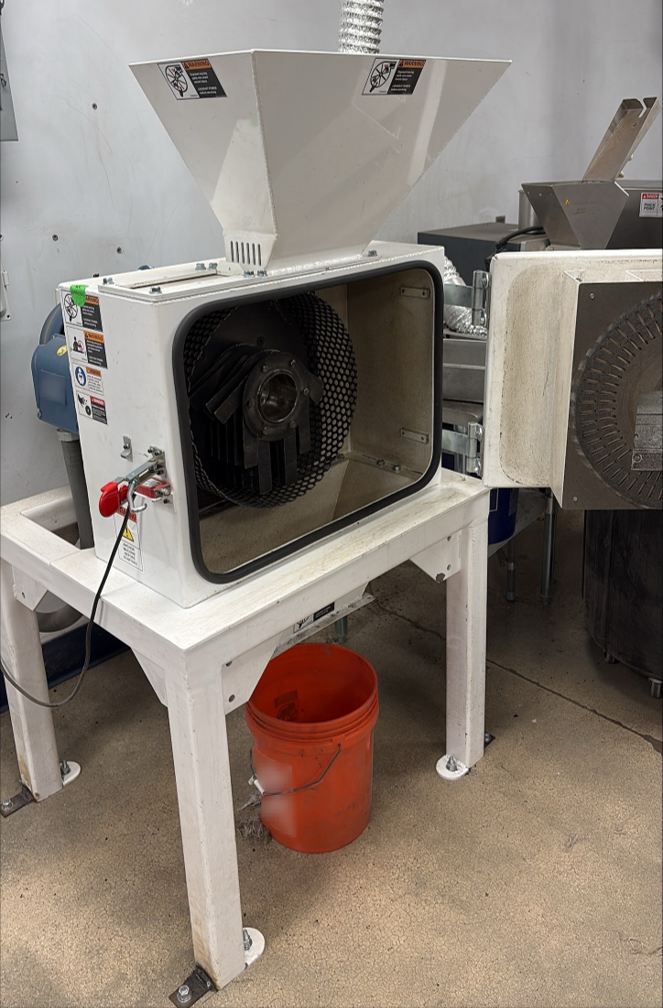
Sample preparation is an essential and key data quality consideration that is often overlooked. When working with heterogeneous PPWR compliance testing samples, this is particularly critical. Food packaging can vary significantly from multi-layer packaging films to coated paperboard or composite textile samples. These materials cannot be analyzed with high precision and accuracy without thorough homogenization. The ALS laboratory in Tucson, AZ has extensive Cryogenic Grinding & Sample Homogenization procedures that utilize cutting and knife mills to reduce samples to <2 mm particle size, ensuring:
- Representative, homogeneous sub-sampling from complex materials
- Complete and reproducible combustion of all sample fractions
- Minimization of matrix-related bias that can compromise data quality
ALS Laboratories Supporting PPWR Testing
ALS Tucson, USA
ALS Tucson offers the first two critical steps in the PPWR compliance to support regulatory documentation and Declaration of Conformity requirements.
The laboratory holds ISO/IEC 17025:2017 Accredited Expanded Scope for Packaging & Textiles. Current validated and fully accredited method capability includes ASTM D8247, a certified test method for total fluorine determination via oxidative pyrohydrolytic combustion followed by ion chromatography detection, as well as EPA 9056 for detecting inorganic fluorine by ion chromatography. These two methods provide the capability to analyze Steps 1 and 2 in the PPWR testing cascade.
ALS Zoppola, Italy
ALS Zoppola is accredited according to ISO/IEC 17025 for targeted analysis of PFAS in food packaging with 30+ targeted PFAS analytes. The analytical method is validated in various food contact material matrices, using a methanolic extraction and LC-MS/MS for quantitative analysis. The standard LOR for the method is 1.0 µg/kg, providing sensitivity to detect individual and sum PFAS for the third step of the PPWR testing cascade.
Sample Collection and Handling
- Samples can be air-bagged or posted to ALS from anywhere globally and do not require chilling or special treatment options
- Sample packaging containers: zip seal bags — ALS has tested a range of these to confirm quality (further details upon request)
| Test Method | Total F and Total Organic F | Targeted PFAS |
| Accredited Laboratory | ALS Tucson, USA | ALS Zoppola, IT |
| Limit of Reporting | 1.0 mg/kg | 1.0 µg/kg |
| Analytical Technique | Combustion Ion Chromatography (CIC) | LC-MS/MS & Total Oxidizable Precursor Assay |
| Sample Containers | Zip Seal Bags | |
| Storage Temp | Ambient temperature | |
| Holding Time | N/A | |
Please contact your ALS Project Manager for further information or to arrange for sampling supplies.
References
- European Parliament and Council of the European Union. (2025). Regulation (EU) 2025/40 of 19 December 2024 on packaging and packaging waste, amending Regulation (EU) 2019/1020 and Directive (EU) 2019/904, and repealing Directive 94/62/EC. Official Journal of the European Union, L 2025/40. https://eur-lex.europa.eu/eli/reg/2025/40/oj/eng
- European Commission. (2026). Packaging and Packaging Waste Regulation (PPWR): Frequently asked questions (2nd ed.; updated August 2026). Luxembourg: Publications Office of the European Union.
- European Commission. (2026). Guidance document for Regulation (EU) 2025/40 on packaging and packaging waste (C/2026/3084). Official Journal of the European Union. https://eur-lex.europa.eu/legal-content/EN/TXT/PDF/?uri=OJ:C_202603084
- ASTM International. (2019). ASTM D8247-19: Standard test method for determination of total fluorine and total chlorine in coal by oxidative pyrohydrolytic combustion followed by ion chromatography detection. ASTM International. https://www.astm.org/d8247-19.html
- Hu, J., Cochran, R. E., Grim, C. M., & Rumachik, N. G. (2025). Comprehensive screening of per- and polyfluoroalkyl substances (PFAS) in food contact materials: Utilizing combustion ion chromatography for total organic fluorine (TOF) analysis. Journal of AOAC International, 108(3), 367-379. https://doi.org/10.1093/jaoacint/qsaf003
- European Commission. (2022). Commission Recommendation (EU) 2022/1431 of 24 August 2022 on the monitoring of perfluoroalkyl substances in food. Official Journal of the European Union, L 221, 105-108. https://eur-lex.europa.eu/legal-content/EN/TXT/?uri=CELEX:32022H1431
- Houtz, E. F., & Sedlak, D. L. (2012). Oxidative conversion as a means of detecting precursors to perfluoroalkyl acids in urban runoff. Environmental Science & Technology, 46(17), 9342-9349. https://doi.org/10.1021/es302274g