































PFAS-Testing built for complex cosmetic formulations

ALS delivers cosmetics-validated PFAS testing built for the challenges of complex products like waterproof mascaras and liquid lipsticks. This service provides the most defensible verification of no-added PFAS. ALS provides results that hold up with major retailers and anticipate compliance with strict emerging regulations, including MoCRA and California's AB 2771.

Our approach combines:

  • Total Fluorine (TF) screening to detect the presence of fluorinated compounds through ion chromatography (IC).
  • Liquid Chromatography-Tandem Mass Spectrometry (LC-MS/MS) targeted analysis validated on cosmetic matrices to identify and quantify PFAS compounds when confirmation or reformulation guidance is needed.

This validation sets the benchmark for PFAS testing, giving brands confidence and defensible results. ALS’ validated methods deliver submission-ready outputs and capture PFAS classes that environmental tests miss, such as PAPs, FTOHs, and polymeric PFAS.

Read the full report on environmental method limitations


What you receive from PFAS testing for cosmetics

  • Defensible “not detected” results validated for cosmetic formulations.
  • Total Fluorine (TF) screening to verify the presence of fluorinated material.
  • Optional LC-MS/MS targeted analysis for identification and reformulation support when PFAS is detected.
  • Matrix-specific validation for mascaras, sunscreens, lipsticks, ffoundations, and other complex products.
  • Submission-ready documentation for retailer QA and evolving MoCRA/EU expectations.
  • Context benchmarks (e.g., 100 ppm / 50 ppm TF, used in other sectors) to aid interpretation while cosmetics-specific limits evolve.
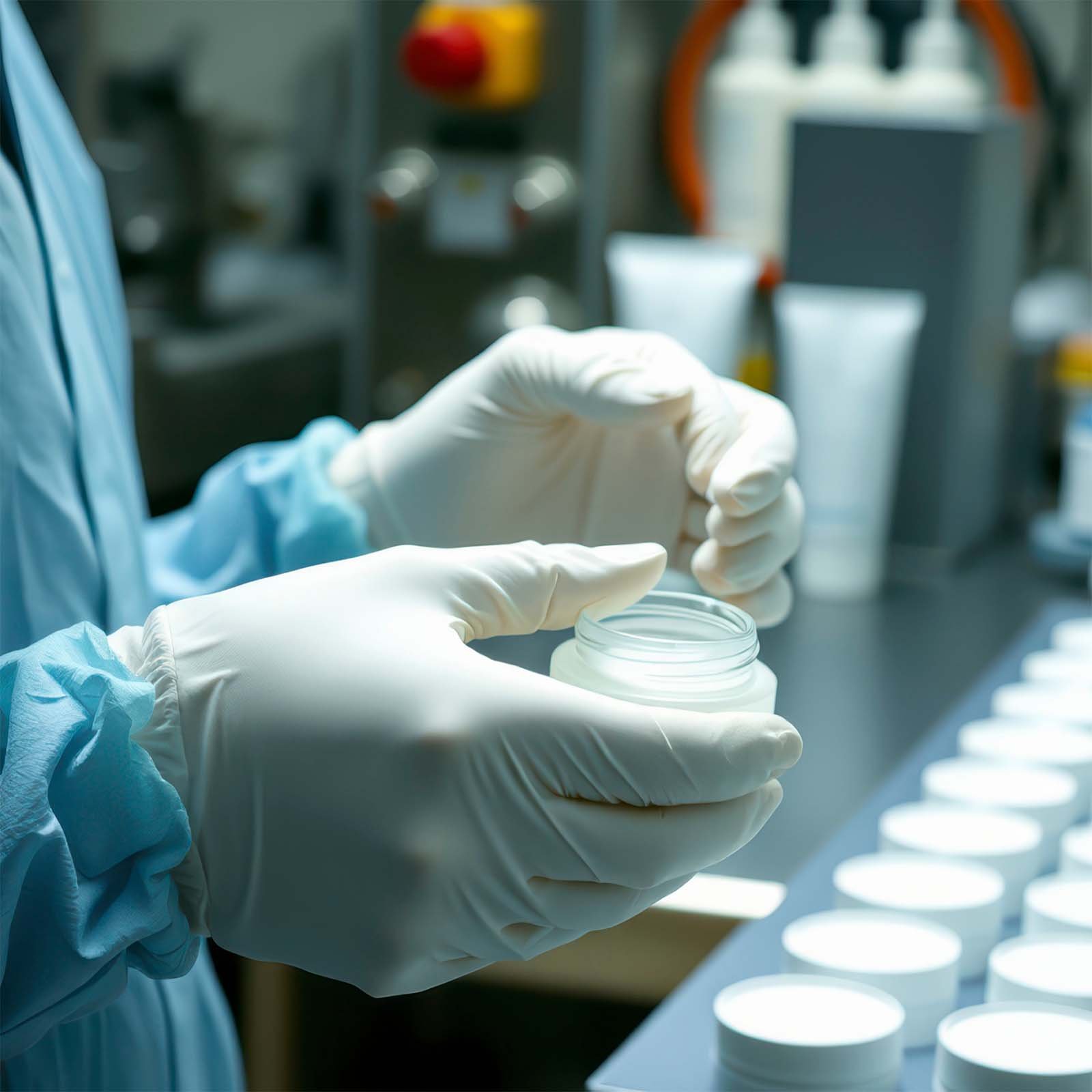
 

cosmetics safety testing

Get defensible, retailer-ready PFAS results

Why choose ALS for PFAS testing?

  • Cosmetics Validation: Methods designed for cosmetic formulations, not repurposed from environmental testing. Our Total Fluorine (TF) screen provides a practical, quantitative first step that is more efficient for commercial risk assessment than complex Non-Targeted Analysis (NTA).
  • Two Pathways: TF provides scalable screening; LC-MS/MS supports deeper analysis and reformulation.
  • Retail-Ready Outputs: Results formatted for Sephora, Ulta, Amazon, QVC, and HSN.
  • Compliance Alignment: Structured for MoCRA safety substantiation, EU SCCS documentation, and state-level bans,  including California's AB 2771.
  • Risk Reduction: Defensible data to avoid recalls, relabeling, or brand exposure from misleading PFAS results and FDA-related confusion.

How It Works

  • Intake – Share product details, target claims, and regions.
  • Total Fluorine (TF) Screening (Ion Chromatography) – A broad, first-pass screen using Ion Chromatography (IC). It quickly identifies all fluorinated content, including known and unknown PFAS. 
  • Confirmation – If TF is elevated, we proceed with LC-MS/MS analysis. This detects and quantifies specific PFAS at trace (parts per billion) levels. Crucially, our validated methods confirm precursors (PAPs, FTOHs) that environmental tests miss.
  • Reporting – Receive submission-ready results, formatted for regulators, major retailers, and internal QA/R&D teams.


Claim support & regulatory alignment

Reliable Verification for No-Added PFAS

  • Defensible 'No-Added PFAS' Claims: Supports the highest level of defensible verification for your marketing and legal claims.
  • Aligned to evolving restrictions including California's AB 2771, France (2026), and EU proposals.
  • Validated on real cosmetic samples, not simulated models.
  • Meets Audit Standards: Our labs hold ISO/IEC 17025 accreditation, ensuring data quality and acceptance by auditors, retailers, and consumer watchdogs like EWG Skin Deep.
  • Submission-Ready Outputs: Deliverables are formatted for regulatory, QA, marketing, and investor use.  


Frequently asked questions

  • Do I need testing if the FDA says PFAS levels are low risk?
    • Testing is critical even if the FDA suggests PFAS levels are low risk. This is because the FDA’s risk assessment does not address brand exposure or evolving global bans. Testing is necessary to eliminate unknown toxicity risks and future-proof against stricter limits like California's AB 2771.