Know your mineralisation

ALS has a thorough knowledge of the mineralogical composition of an ore or process product. It is critical when using metallurgical processes to extract value metals or reject impurities. Understanding the mode of occurrence of the mineralisation, therefore, is highly beneficial to achieving optimum recovery, extraction, or rejection of target minerals. A clear mineralogical profile will focus the metallurgical testing regime to the best process circuit, which can ultimately save time and money without having to laboriously conduct all options to find the best outcome.

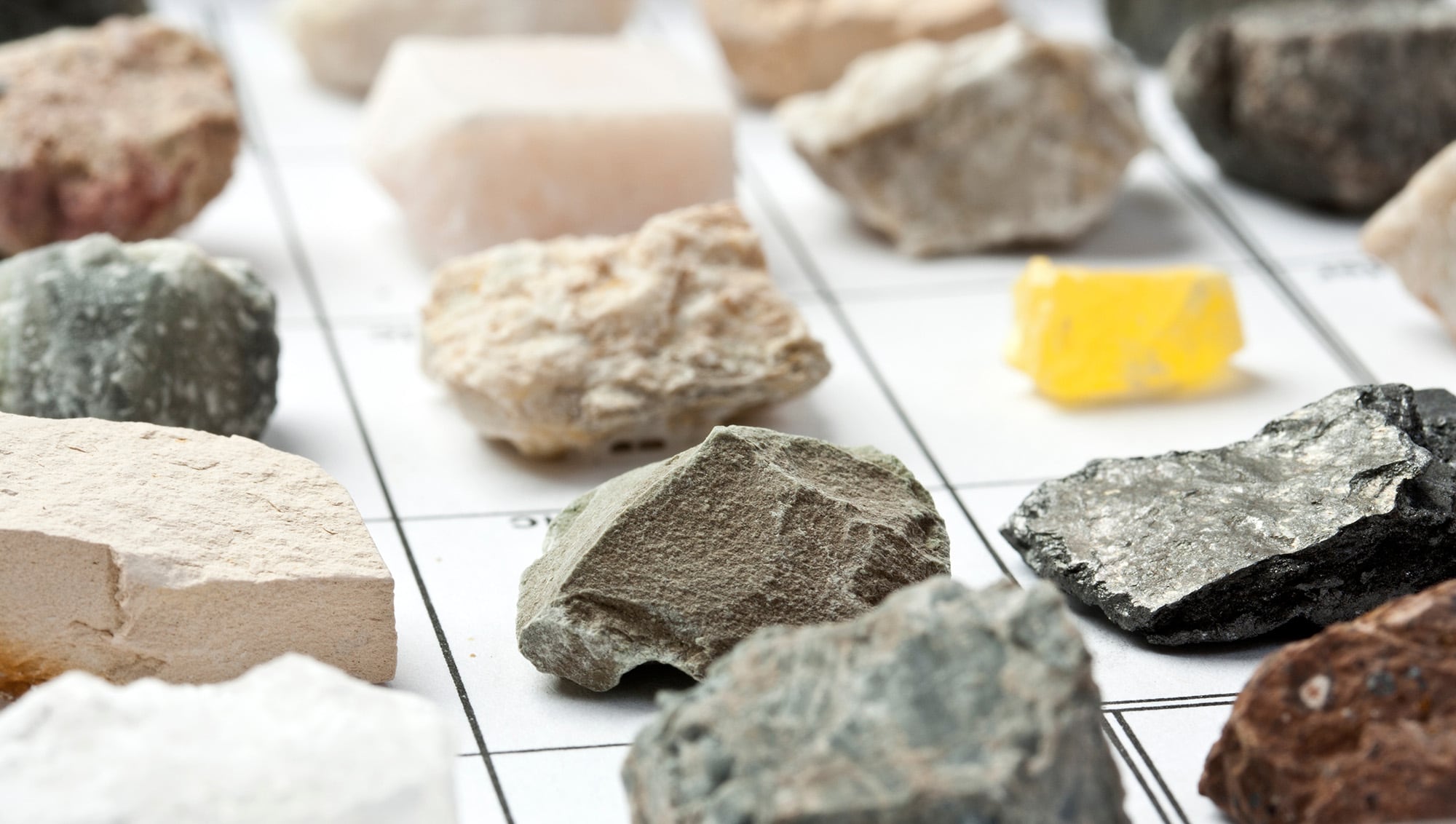
collection-of-minerals

Expert mineralogical & metallurgical advice combined

Mineralogy is a vast and complex science that requires niche expertise to interpret the volumes of intricate data. As good as the ever developing XRD, MLA, and SEM scanning hardware and software is, many situations require human interpretation in conjunction with other factors to achieve the correct result. Rather than dumping reams of complex data or raw machine output to our clients, our world-renowned ALS mineralogists work closely with our metallurgical team to deliver an accurate qualitative/quantitative mineralogical assessment relative to the metallurgical program objectives.

amethyst-makro-kristalllandschaft

Mineralogical services

Our team can cover a large swath of mineralogical areas, including all base metals, iron ore, gold occurrence, rare earth, and specific processing products. Moreover, the ALS Metallurgy and Mineralogy team can also leverage with ALS Geochemistry colleagues to provide the best service outcome.

Our services include the following:

  • XRD Semi Quantitative Analysis
  • XRD Quantitative Analysis
  • Mineral Liberation Analyser (MLA)
  • Automated QEMSCAN quantitative mineralogy
  • Optical microscope examinations
  • HyLogger™ spectral analysis

Customised reports are prepared to meet requirements with detail including:

  • Mineral List (including formulae and elemental percentages)
  • Mineral Abundances (wt %)
  • Elemental Distribution of valuable and penalty
  • Grain Size Distribution
  • Mineral Association, Locking and Liberation
  • Theoretical Grade Recovery Curves
  • Filtering of Data (e.g. to establish grain size of locked minerals of interest)
  • Coloured Mineral Maps provide qualitative data.

Mineralogy information can add value at all points in a life cycle of a minerals project. Benefits and uses include:

  • Exploration
  • Prefeasibility studies & feasibility studies
  • Resource and reserve determination
  • Geometallurgy
  • Mine planning & production scheduling
  • Comminution and beneficiation process design
  • Extraction process design and optimisation
  • Pilot plant testwork support
  • Plant control and troubleshooting
  • Plant audits and monthly surveys
  • Sales and marketing, and transportation of final products
  • Smelter Management
  • Environmental assessment programs
  • Mine rehabilitation
  • Prediction of leach parameters such as leach rates, acid consumption, acid generation and heat generation.
  • Elemental deportment of valuable, deleterious and penalty elements between minerals.
  • Mineral liberation and locking analysis per size fraction with specific emphasis on surface exposure.

Specifically for gold samples, gold-bearing grains can be characterised larger than 0.5μm in size and can be discriminated between gold species, such as native gold, electrum, maldonite, calaverite, hessite, petzite, sylvanite, aurostibite, aurocuprite, and others. This knowledge is important since gold alloyed with elements such as antimony, bismuth, tellurium, and even silver are less soluble than native gold. The identification of potentially deleterious minerals, such as gold-robbers (for example, active carbon and pyrrhotite), environmentally undesirable elements (for example, arsenic and lead),and minerals that could potentially consume acid, alkali, or oxygen is also hugely beneficial.

Here are some frequently asked questions

  • How much sample mass do I need for these tests?

    Mineralogy requires very little sample mass for examination – typically 5-100g will suffice.

  • What particle size or distribution can be examined?

    There are instrument limits on particle size to typically below 10 mm, but particle size distribution plays an important role in accurate quantitative reporting. A wide ranging particle size distribution may have to be split into multiple fractions for separate analysis.

  • What about gold particles? What if you don’t find any?

    Indeed, free-forming gold particles are usually in very small concentrations, and as such, these samples will need some form of gravity concentration to capture sufficient particles for examination. Your ALS metallurgy representative can advise on these pre-concentration requirements.

  • What is mineralogy turnaround time?

    Mineralogy is not an overnight assay service. Turnaround time is inclusive of sample preparation, machine time, interpretation and reporting, followed by quality review. Turnaround time is also heavily dependent on the mining cycle and general workloads/demand. Urgent turnaround time (1 week) can often be scheduled with the requisite communication/organisation. Surcharges may apply.

  • Our samples are from overseas, what do I do?

    ALS is a quarantine approved premises and treats many samples of oversea origin. Strict regulatory requirements are in needed around packaging and paperwork, however. ALS can advise you on these requirements.

Associated testwork services

Related testwork

Mineralogy is very often part of a larger our metallurgical testwork program. Click the following links for other downstream testwork services:

Click on the above links or contact us for further information. We can integrate a full program for you if required.