


























Transfer modelling

Bulk solids handing plays a critical role in the cost effectiveness of any mining operation or process plant. Iron Ore operations in particular, involve extremely large materials handling facilities to move millions of tonnes per year from mine to port. Direct costs associated with analysis and modelling of transfers during the design phase are insignificant when compared to redesign or retrospective replacement of major capital infrastructure. For this reason, ALS runs a niche business at our Iron Ore Technical Centre (IOTC) for the analysis and physical scale modelling of transfer chute designs.
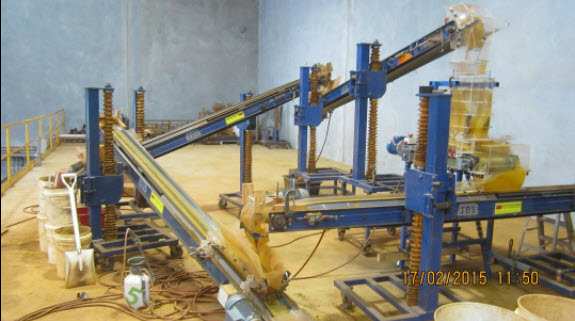
Modelagem de transferência

Transfer modelling services

The transfer modelling business is located at the IOTC and offers the following services:

  • Design and construction of a scale model replica of existing or proposed chutes, usually at 1/10 scale.
  • Flow trials to identify flow conditions and potential problem areas in existing chutes (i.e. spillage, blockages, wear etc.).
  • In conjunction with your engineering team, ALS can carry out design modifications to the model and perform flow trials to improve performance of that transfer.
  • A Report on modelling outcomes with recommendations. A video provided will show how the transfer performs under the various operating conditions required, and drawings of the revised design produced.

Need more information?

Transfer modelling is a specialist area and our ALS expert can advise you on the best materials flow solutions.

Please contact us for further details.

Here are some frequently asked questions

  • Is transfer modelling better than computer modelling?

    Arguably, yes. The interaction of particles over one another whilst flowing in a bulk handling chute is extremely complex and difficult to model mathematically, requiring many assumptions that may or may not occur in plant practice. Scale models, however, will more accurately emulate real world flow conditions relative to the chute geometry on the actual material in question.

  • Will ALS treat hazardous samples?

    Generally, yes. ALS has facilities and procedures to treat fibrous and radioactive samples. Surcharges do apply, however, to cover safety equipment, monitoring and decontamination.

  • Our samples are from overseas, what do I do?

    ALS is a quarantine approved premises and treats many samples of oversea origin. Strict regulatory requirements are in needed around packaging and paperwork, however. ALS can advise you on these requirements.

  • Can my associates and I view the testwork at ALS’s laboratory?

    Yes, clients are always welcome to visit our facilities and observe samples or tests in progress. Inductions are required and other rules may apply to visitors.

  • Will ALS dispatch my samples to third parties?

    Yes, if a testwork program is in progress, ALS will happily dispatch testwork products and feed samples to vendors, third party laboratories, and customers as required. Fees apply.

  • Does ALS do design engineering and consulting?

    No, as it is not our core business and would put us in direct competition with many of our clients. In the case of HPGR testwork programs, KMA as equipment suppliers, provide engineering and consultancy for their industrial units and can provide relevant information for the manufacture and supply of appropriate Koeppern HPGR units.

Associated testwork services

Transfer modelling will often require sample preparation of:

Click on the above links or contact us for further information. We can integrate a full program for you if required.