



















 Search
 English





















 Login
Login

EnviroMail 74 Canada
Reliable Ultra-Trace Metals Analysis of Marine and Estuarine Waters and Brines

Achieving reliable and defensible ultra-trace metals testing of saline waters is among the greatest challenges for environmental laboratories. The ALS Environmental specialty metals program is built on decades of expertise in ultra-trace elemental analysis and contamination control, and features Triple Quadrupole Inductively Coupled Plasma Mass Spectrometry (QQQ-ICP-MS) for testing highly saline samples, delivering detection limits and data quality unmatched by conventional testing methods.
Ultra-trace metals analysis of seawater, estuarine and brackish waters, and industrial brines by ICP-MS is difficult because high levels of dissolved salts can suppress ionization, overload the instrument’s sample introduction system, and generate complex polyatomic interferences (particularly chloride species), which can introduce bias or false positive results if not controlled.
Classical methods for ultra-trace metals analysis in saline waters use intensive physical matrix removal and/or pre-concentration techniques with chelating agents to reduce salt impacts, but these methods are extremely laborious and costly, and cannot be optimized for simultaneous analysis of extensive suites of metals.
Modern Triple Quadrupole ICP-MS provides unparalleled selectivity and interference management, enabling reliable ultra-trace-level metals reporting in saline waters without the need for complex matrix removal.
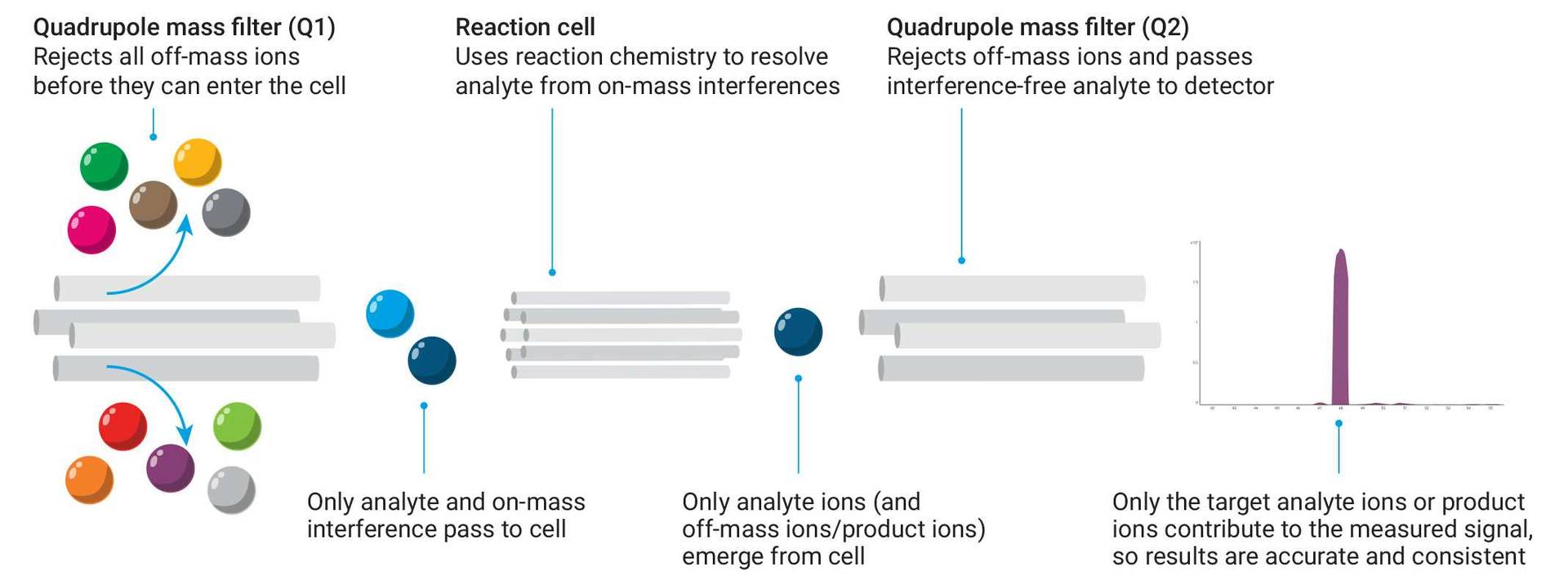
Fig 1. Schematic illustration of QQQ-ICP-MS
(image courtesy of Agilent Technologies)
Benefits of QQQ-ICP-MS for Saline Waters
With traditional elemental analysis by single-quadrupole ICP-MS, a mist of sample is nebulized into an argon plasma at 6,000–10,000 K, where metals are ionized and then isolated for measurement with a quadrupole mass filter. In highly saline samples, however, the formation of polyatomic ions in the plasma causes severe interferences. Today, most routine metals analyses (except mercury tests) use collision cell or reaction cell ICP-MS to reduce common interferences through kinetic energy discrimination or reaction gases. However, these approaches are still challenged by highly saline waters.
Triple quadrupole ICP-MS addresses these limitations by adding an additional quadrupole mass filter before the collision/reaction cell to precisely control which ions enter the cell. Selective use of reaction gases and mass-shift approaches can then be applied to remove difficult interferences, such as polyatomics from chloride-rich samples. The result in saline waters is cleaner backgrounds, greatly reduced interferences, and improved confidence and reliability at low concentrations.
As an example, vanadium measurement in seawater by single-quadrupole ICP-MS is challenging because the 51V+ ion is directly overlapped by a chlorine-oxide polyatomic interference (35Cl16O+), often causing false positives, even when collision cell ICP-MS with helium is used. With QQQ-ICP-MS, interference from the 35Cl16O+ ion can be removed by converting it to a larger non-interfering species with a reaction gas.
QQQ-ICP-MS is well suited for background oceanographic studies and marine water monitoring programs where full suites of metals must be measured down to background levels, where possible, or where reliable assessment against marine Water Quality Guidelines (WQGs) for critical metals is required.
Marine WQGs, Background Levels, and LORs
Testing of ultra-trace-level metals in marine and estuarine waters is often required for baseline monitoring programs prior to major development projects with potential to impact marine ecosystems, and for ongoing marine monitoring programs after project initiation to identify possible impacts or changes that may require additional management.
In all coastal regions of Canada, measured marine water concentrations are assessed against the CCME (Canadian Council of Ministers of the Environment) and ECCC (Environment and Climate Change Canada) Marine Water Quality Guidelines for Aquatic Life. British Columbia supplements these federal guidelines with additional provincially developed long-term (chronic) and short-term (acute) guidelines. Table 1 highlights all current CCME, ECCC, and BC marine WQGs for metals, and for context also provides an indication of mean open-ocean background metal concentrations.
The technical guidance documents for the CCME, ECCC, and BC marine WQGs state applicability to total (digested) metal species, which is conservative, since dissolved species tend to have higher bioavailability.
Hexavalent chromium, trivalent chromium, and mercury are shown in Table 1 because BC or CCME marine WQGs exist for these metallic species, but they require separate tests (not included with QQQ-ICP-MS metals). Total chromium includes all chromium species, and is often used as a conservative screening test to identify potential exceedances of hexavalent chromium WQGs. In oxygenated marine waters, dissolved chromium exists almost exclusively as the hexavalent species. The BC marine WQG for antimony applies to trivalent antimony, but measurement of total antimony is normally used to confirm absence below the guideline.
Table 1 also lists the ALS Limits of Reporting (LORs) for all elements available from the ALS QQQ-ICP-MS methods for total and dissolved metals. All LORs are at least a factor of three below the relevant BC and federal marine WQGs.
Table 1. BC and Canadian Federal Marine Water Quality Guidelines, Mean Open-Ocean Concentrations, and ALS Seawater QQQ-ICP-MS LORs
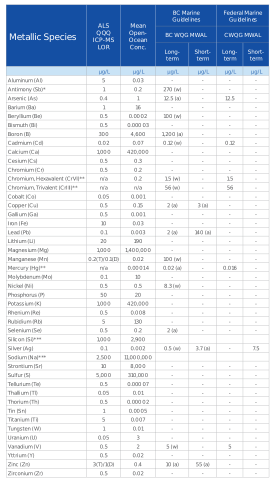
* BC WQG MWAL for Sb applies to trivalent antimony (SbIII).
** CrVI, CrIII, and Hg are separate tests (not done by QQQ-ICP-MS).
*** Na and Si are available on request by QQQ-ICP-MS.
BC WQG MWAL = British Columbia water quality guidelines for protection of marine aquatic life.
CWQG MWAL = Canadian (CCME and ECCC) water quality guidelines for protection of marine aquatic life.
BC WQGs are indicated as Approved (a) or Working (w).
BC WQG for Hg shown assumes MeHg at 0.5% of total mercury concentration (calculated function).
Mean open-ocean concentrations are from Monterey Bay Aquarium Research Institute.
Sampling Challenges and Guidance
Testing for ultra-trace metals in any water sample can be limited by artifacts and contamination during sample collection. The following points outline recommended practices to ensure water samples collected for trace metals analysis are reliable and defensible:
- Use sample containers provided by the laboratory that are verified as suitable for ultra-trace metals testing.
- When sampling, avoid contact with any uncoated metallic components anywhere in the sampling chain (such as metal fittings, springs, clamps, exposed metal weights, uncoated metal pump parts). Contact with surgical rubber tubing should also be avoided. Use verified-clean plastic or fluoropolymer materials wherever practical.
- When sampling from a boat, use sampling apparatus designed to avoid contaminants at the surface or introduced by the boat or its fuel, bilge fluid, or exhaust (e.g. Niskin bottle with non-metallic internal components designed for trace metals sampling at the desired depth).
- Minimize sample transfers and avoid exposure to dust and any materials not verified as suitable for trace metals. Avoid placing caps on potentially contaminated surfaces. Change powder-free gloves frequently, and avoid touching surfaces that will contact samples.
- Dissolved metals samples require clean field filtration. Filter samples at time of sampling with 0.45 µm membrane filters and all-plastic syringes (avoid syringes with black rubber plungers) using verified-clean equipment. Field filtration blanks are strongly recommended. ALS provides suitable syringes and filters on request. In-line disposable cartridge filters should be pre-rinsed with sample or deionized water prior to sample collection (ALS recommends pre-rinsing with 1 L of sample unless smaller volumes have been verified).
- ALS recommends lab preservation for total and field-filtered dissolved metals samples, but field preservation with nitric acid should be done if testing is needed on a rush basis.
- Equipment blanks are strongly recommended to verify suitability of all sampling equipment for ultra-trace metals testing of waters. Many metals are ubiquitous and trace levels can be leached from most materials, especially under acidic conditions.
Table 2. Sampling Details for Seawater Metals
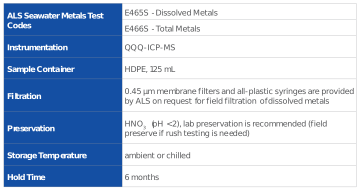
Please contact your ALS Project Manager for more information or to request sampling supplies. If mercury or speciated chromium analyses are also required, additional tests and sample containers are needed.
References
Periodic Table of Elements in the Ocean, Monterey Bay Aquarium Research Institute, California, USA (density corrected and rounded). https://www.mbari.org/know-your-ocean/periodic-table-of-elements-in-the-ocean/summary-table/.