




























 Login
Login

Environment Award 2026
What began as a local effort to tackle single-use plastic waste evolved into an award-winning initiative, with the Environmental team in Vancouver pioneering a validated tube-reuse program with potential for wider adoption.
2026 Environment Award winner
From single use to smart reuse
By rethinking one of the most common items in the laboratory, our Environmental team in Vancouver created an award-winning initiative with a positive environmental impact and global potential.
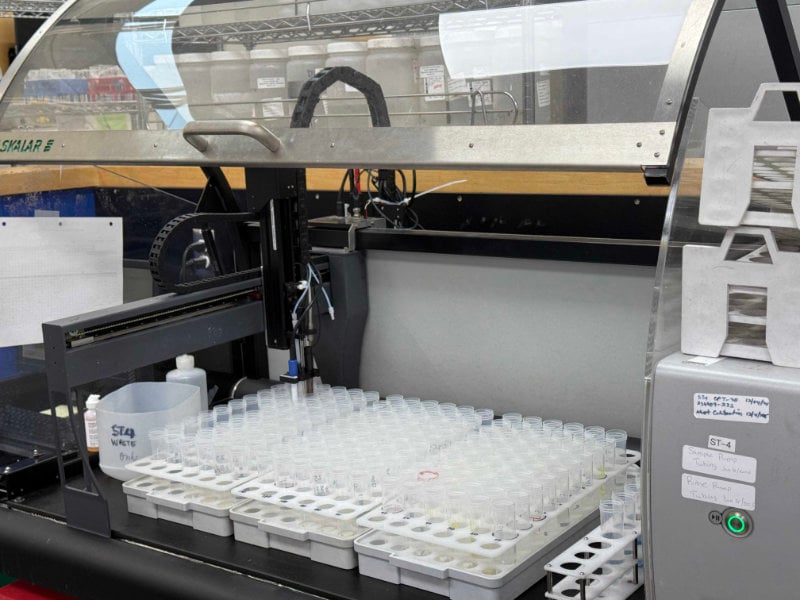
The project set out to address the significant volume of disposable tubes used across Canadian operations, where around 480,000 are consumed each year. The challenge was finding a way to safely reuse the tubes without compromising analytical quality.
The search for a solution took the team from Vancouver to Miele's research and development facility in Germany, where they worked alongside engineers to test different rack configurations and washing processes. Together, the teams developed and validated a cleaning method that delivered reliable, repeatable performance.
To support the process, the Vancouver team designed custom 3D-printed racks that ensure tubes are positioned correctly during washing and stored securely afterwards.
Following more than 1,500 successful wash cycles and quality control checks, the process was introduced into full production in Vancouver.
Technical Innovation Manager Louis Wagner said the project demonstrated how practical innovation can unlock broader opportunities across the business.
“Once we broke the process down, we could engineer a solution that would hold up in daily operation,” Louis said.
“The 3D-printed racks were a game changer, and protocol, rack designs and validated workflow have the potential to be replicated across our laboratories globally.”
The initiative is expected to avoid around 4,100 kg of plastic waste while delivering consumables savings. It supports ALS' net zero ambitions and shows how operational innovation can improve both sustainability and efficiency.
What started with a single plastic tube has become a practical example of how collaboration, ingenuity and a willingness to challenge established practices can create benefits that extend far beyond one laboratory.