





















 Search
 English



























 Login
Login


EnviroMail™ 167 Australia
Testing airborne and particle-bound PFAS with OTM-45
ALS now offers this advanced method to support compliance and risk assessment

As understanding of PFAS mass flux deepens, regulatory and industry focuses are shifting towards airborne emissions as a potentially significant source of environmental contamination, driving the need for more advanced sampling methods.
Introduced in 2021, the US Environmental Protection Agency’s (EPA) Other Test Method 45 (OTM-45) was originally developed for the North American market to better characterise and standardise PFAS in air emissions – a previously underexplored pathway. Despite these international advances, the extent of airborne PFAS contamination across Australia remains poorly understood.
OTM-45 is often applied alongside Other Test Method 50 (OTM-50) method, introduced in 2024. The two methods were designed to capture different components of PFAS in air emissions. While there is some conceptual overlap, OTM-50 focuses on volatile PFAS in gas form, while OTM-45 aims to capture semi-volatile PFAS across both particulate and gaseous phases, with particular focus in PFAS emitted from high-temperature generating processes. OTM-45 also differs as it adapts sampling trains from Hazardous Waste Test Methods (SW-846) to isokinetically sample air and gas from stationary gas emissions.
Used together, they can provide a comprehensive and complementary understanding of PFAS emissions and mass flux through air. Both methods are now available for testing in ALS laboratories, supporting improved access to PFAS air testing across Australia.
Environmental sources and transmission
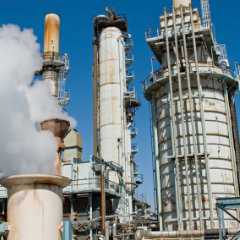
Gas phase and particle phase PFAS may be emitted into the environment through a range of sources. Emissions from industrial processes, manufacturing facilities, weathering of PFAS-containing materials and combustion or incineration of PFAS have all been identified as potential vectors of airborne PFAS spread. Once emitted, PFAS can travel significant distances, with detections reported in remote regions such as Antarctica (Casal et al., 2017) and other areas that have no known PFAS industries, highlighting the role of air as a key transport pathway.
PFAS has been shown to remain at the air-water interface (Lemay, 2025) due to the hydrophobic fluorocarbon backbone and the polar head functional groups. This causes a partitioning between gas and water phases, contributing to its mobility through gas or particulate matter. Short chained-PFAS, generally more water soluble, will likely partition to aqueous aerosols, while low soluble longer-chained PFAS partition onto surface airborne particles (Lemay, 2025).
Once airborne, atmospheric movement shifts PFAS, sometimes thousands of kilometers from its original source. A mixture of wet and dry deposition within the atmosphere then precipitates PFAS back into the environment (Ying Yao, 2025).
Regulatory drivers of PFAS in air testing
International governments and regulatory bodies have started to identify air as a vector for PFAS movement in the environment, shaping regional responses to air emissions monitoring across Australia. Thermal treatment and desorption facilities can be a major source of PFAS, owing to their work with highly contaminated samples. While most facilities are required to carry out mass balances to account for any PFAS losses, these may not capture all PFAS species or account for other losses.
The European Union is a key example of government agencies initiating testing mandates of airborne PFAS. Working under Directive 2010/75/EU on Industrial Emissions, better known as the Industrial Emissions Directive (IED), the EU aims to reduce industrial emissions throughout EU member states to safe levels by 2050, with PFAS as a key emission focus. The US EPA is similarly working towards a technical foundation in regulating PFAS in air, with violating polluters sanctioned and fined for environmentally contaminating air emissions.
Within Australia, the PFAS National Environmental Management Plan (NEMP 3.1) is the key national guidance addressing PFAS in air, leading the regional case for air emissions to be assessed as a possible vector for PFAS to spread through the environment. Although limited in regulatory oversight, it is a strong foundation for industry and commercial action to address the lack of data in the region around PFAS in air and to seek alignment between environmental monitoring approaches and understanding of atmospheric PFAS dispersion.
OTM-45, in conjunction with OTM-50, is currently the best-suited method, as per the US EPA, [DK1.1]to help support industry in achieving quality and reliable PFAS air sampling and analysis. ALS is now offering this leading, regulator-aligned approach for PFAS testing.
Methodology
OTM-45 uses a sampling train adapted from SW-846 methods, with the removal of potential PFAS contamination sources as a key modification. Air sampling pumps are set to withdraw samples from an air or gas flow, utilising a glass or quartz-filtered probe.
Flow is then condensed and deposited through a XAD-2 resin, a polymeric adsorbent provided by ALS. The flow continues through a series of impinger solutions before passing through a final XAD-2 resin breakthrough trap.
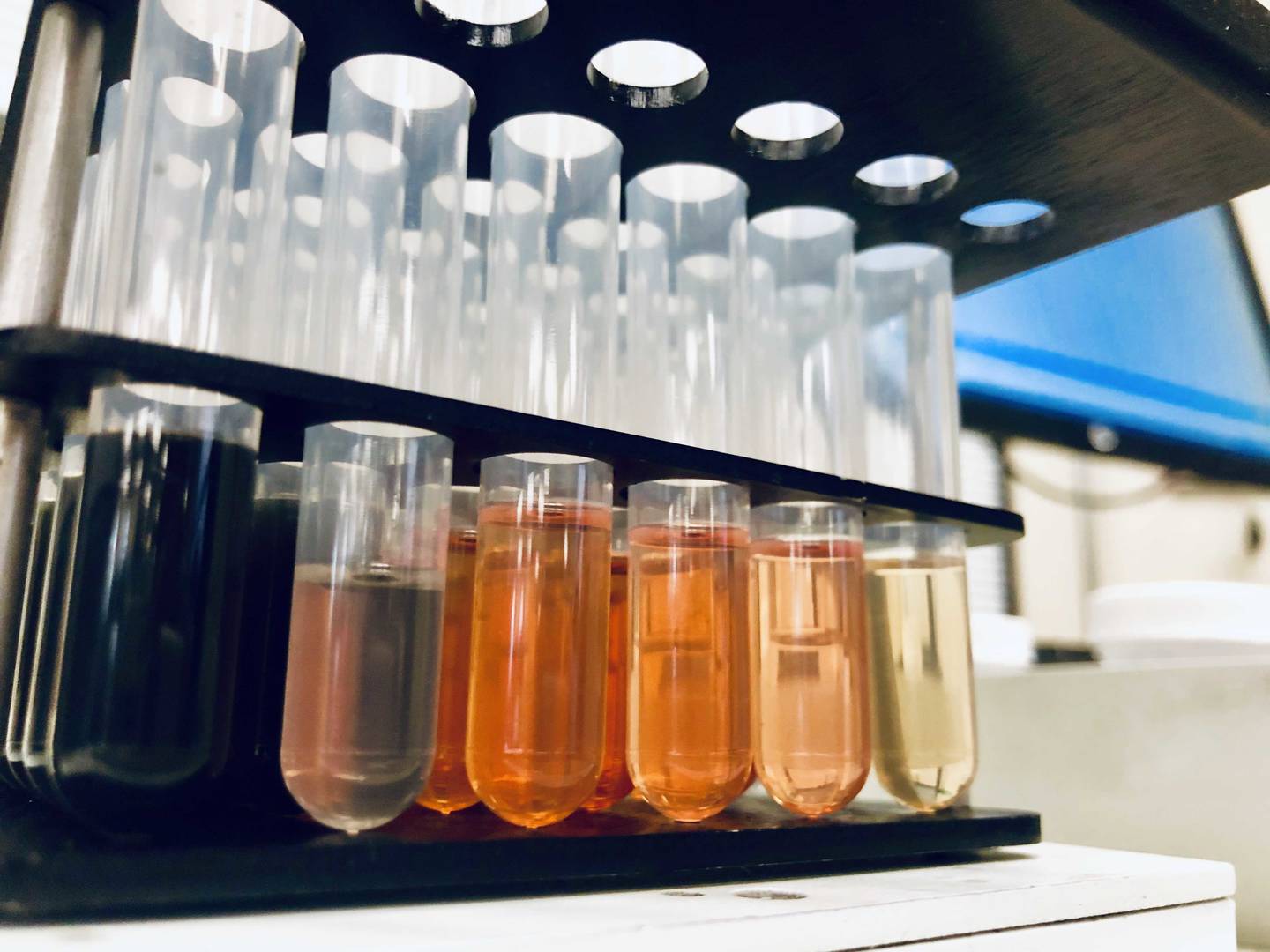
The full sampling train generates a series of seven different samples, which are then combined into four for final extraction and analysis through liquid chromatography tandem mass spectrometry (LC-MS/MS).
Recoveries are monitored and calculated using a solution of isotopically labelled PFAS standards, fortified onto the first XAD-2 resin tube. Finally, a sum is calculated across all extracts to monitor and assess potential analytical losses.
The OTM-45 method reports PFAS compounds as ng/fraction calculated through concentration per liter of gas flow, providing an accessible and practical format for environmental consultants, project assessors and industry decision-makers working with PFAS in air. For a list of the limits of reporting for the 55 PFAS compounds available for analysis, see Appendix 1.
Experience expert PFAS testing with ALS
ALS is a global leader in PFAS testing, with extensive experience supporting complex PFAS investigations and remediation projects across Australia. As regulatory requirements and project needs continue to evolve, choosing a laboratory partner with up-to-date technical expertise is critical.
We are committed to expanding scope of accreditation to meet shifting compliance demands, with OTM-45 as the latest addition to our breadth of accredited capabilities. ALS also currently holds PFAS testing accreditations for OTM-50 across a wide range of matrices, including soils, biosolids, wastewaters and other environmental samples.
ALS can further support your sampling requirements by providing essential supplies, including pre-loaded PFAS-free XAD-2 resin traps for the OTM-45 method.
Backed by deep technical expertise, robust quality systems and global laboratory capacity, ALS delivers reliable analytical support across the full lifecycle of PFAS projects – from initial site assessment through to long-term monitoring and compliance.
Get in touch with us
By aligning our PFAS methods with international frameworks, we can deliver trusted insights that drive confident compliance and risk assessment strategies.
Contact your local ALS Project Manager today for more information about the new OTM-45 method.