
























By actively conducting our own research in isotope testing, often in partnership with external institutions, ALS is at the global forefront of isotope ratio analysis for a wide range of industries and scientific fields. This includes but is not limited to:
Access a list of publications as well as information about our isotope testing laboratory here.
Isotope analysis is a cornerstone of geology, geochronology and geochemistry because the natural variation in isotope ratios between elements acts as a chemical fingerprint – recording the conditions, temperatures and processes under which rocks and minerals formed. By measuring isotope ratios, it is possible to determine the age of geological events and reconstruct the chemical and thermal history with precision that no other analytical method can match.
A new method using MC-ICP-MS for precise measurement of Mo isotopic composition in geological samples has been developed. One advantage of the technique over previous MC-ICPMS methods includes a novel efficient purification chemistry of Mo that allows efficient separation of Mo from Fe and other concomitant matrix elements.
Read more (new window)
Isotope ratio measurements of Fe are important for a variety of applications, and the required levels of precision and accuracy vary greatly between different tasks. Using the high-resolution mode of the Thermo Scientific Neptune MC-ICP-MS instrument, all spectral interferences are completely resolved, allowing for high-precision and high-accuracy determination of Fe isotope ratios.
Read more (new window)
Knowledge about the order and timing of geological events is an essential part of understanding how ore deposits have formed. Learn more about what ALS can offer.
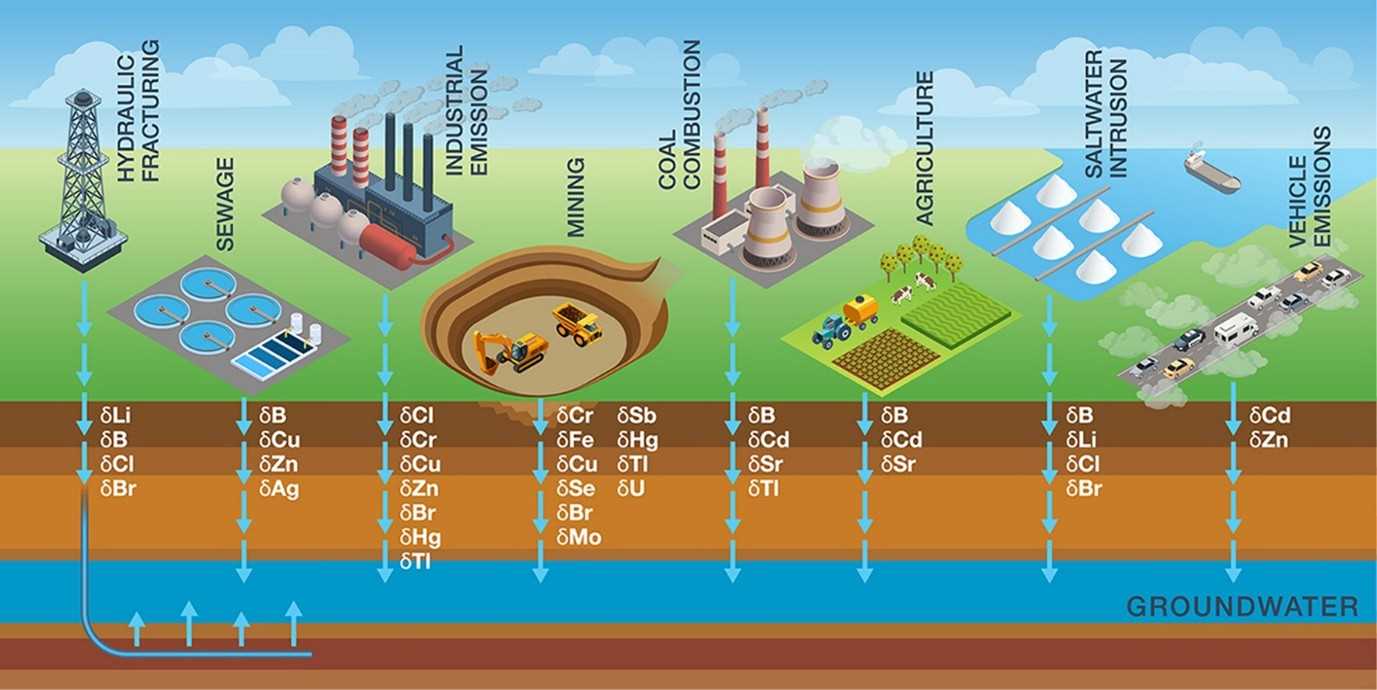
Read moreHigh-precision isotope analysis is a powerful tool that can be used to trace sources of pollution (environmental forensics) and exposure to certain elements. Human activities have a strong environmental impact that needs to be determined and quantified.
Variations in isotopic composition of elements is used in the practice of identifying pollution sources, and a significant number of stable isotope systems have emerged as promising tracers of anthropogenic contamination. The addition of stable isotopic systems to radiogenic systems combines source identification/source tracing with the possibility to monitor post-release transformation of pollutants.
ALS offers isotope analysis of more than 20 isotopic systems, including stable isotopes that have emerged as potential tracers of contamination sources.
Experts at ALS have co-authored a scientific paper 1 on anthropogenic contamination of water resources and analysis of stable isotopes as a tool to trace pollution sources.