











 Rechercher
 français






 Connexion

Enduring environmental challenges
French adventurer Rémi Camus confronts extreme natural environments, and partners with water pollution testing leader ALS to reveal truths about the water we drink

The incident that inspired Rémi Camus to become an advocate for clean water might be disturbing to some readers.
In 2011, during his first big adventure – a grueling 5,400-kilometre run alone across Australia from Melbourne to Darwin – on a back road in the middle of the desert, Rémi ran out of water.
The 40-kilogram cart he pulled behind him had been well stocked, but he was burning through over 20 litres of water per day, and now the supply had completely dried up far from the next town.
‘I needed to find water,’ Rémi says. ‘I carried on for three days without drinking a single drop. On the fourth day, I had no choice: to keep from dying, I had to drink my urine. It saved my life by helping me make it another 20 kilometres to a tank with poor-quality but drinkable water. It then took another full day to recover.’
He managed to get back on the road, but his energy was depleted.
That near-death experience changed the meaning of his journey, which had started as a project of personal discovery.
‘If it affected me this much on my run, I wondered, what was it like for people around the world suffering from lack of clean drinking water? I knew I had to help do something about it.’
That revelation initiated his 15 years (and counting) of extremely challenging explorations to raise awareness of the scope of the global water pollution problem and the need for greater access to safe drinking water. Central to his mission has been the gathering of scientific evidence through his partnership with global testing leader ALS.
‘If you did a journey like this without the help of a lab, it simply wouldn't be possible,’ he explains. His teaming up with ALS makes even more sense given that he didn’t have a background in science.
Rémi was brought up in the French countryside by a family of modest means. The forest near his home became his safe place and the local wildlife his friends. It instilled in him a deep connection to nature.
He also took to formal education, but his family could only afford his first 2 years of college, so he left school at 18 and went to work in restaurants, rising through fine dining establishments to achieve the role of maître d'hôtel in a Michelin-star restaurant in France near the Swiss border.
Then, at 26, while visiting a flea market in Brittany with his mom, Rémi randomly picked up the book that would recalibrate his life: Jamel Balhi’s Au cœur des Amériques [In the Heart of the Americas], an autobiographical account of the author’s 24,000-kilometre solo run from Alaska to Argentina.
‘If this guy could manage to run across America, why can’t I do the same?’ Rémi thought.
That proverbial thirst for adventure that initiated his run across Australia showed him what he was made of – and the actual thirst he endured in the desert inspired his passion for clean water awareness. For his next two adventures, he decided to literally get in the water.
When he returned to France, he prepared for his second adventure: a sixth-month, 4400-kilometre journey down the entire Mekong River using only a small flotation device called a riverboard – from Tibet in the north, through Myanmar, Laos, Thailand, Cambodia, and Vietnam to the South China Sea. His goal was to meet the people who live on and drink from the Mekong, to better understand the importance of the quality of river water.
In 2013, he began the grueling expedition and again experienced physical setbacks: this time a badly swollen leg and a skin condition that required hospitalization. But he kept going, encountering particularly intense pollution in the south, as everything floats downriver.
‘With 70 million people living near the river, all the trash dumped in it ends up in the China Sea,’ he explains.
After swimming for over 3 months, he completed the journey but didn’t stop there; he leveraged public interest in his story by organising talks in Vietnamese schools to raise awareness of plastic pollution and the need for better waste management, adding his voice to the growing environmental protection movement in Vietnam.
The Mekong expedition revealed to Rémi the extent to which river water pollution can ultimately impact sea water, so for his third expedition, he chose to become the first person ever to swim the entire 2,650-kilometre French coast, from Dunkirk in the north to Monaco in the south – this time without a riverboard while towing a life platform.
The last leg of that journey in 2018, swimming along the coastline of the Mediterranean Sea, revealed to Rémi what he calls the paradox of the Mediterranean:
'It’s the contrast between what we see and what’s really there,’ he says. ‘The surface of the Mediterranean is blue and beautiful, but put your head just under the water, and you see that it's full of trash: wrecked cars, fridges, microwaves, plastic, everything.’
Up to that point, his awareness-raising had focused on only this type of pollution: the detritus of human consumption, which you can see if you look closely enough.
In 2011, during his first big adventure – a grueling 5,400-kilometre run alone across Australia from Melbourne to Darwin – on a back road in the middle of the desert, Rémi ran out of water.
The 40-kilogram cart he pulled behind him had been well stocked, but he was burning through over 20 litres of water per day, and now the supply had completely dried up far from the next town.
‘I needed to find water,’ Rémi says. ‘I carried on for three days without drinking a single drop. On the fourth day, I had no choice: to keep from dying, I had to drink my urine. It saved my life by helping me make it another 20 kilometres to a tank with poor-quality but drinkable water. It then took another full day to recover.’
He managed to get back on the road, but his energy was depleted.
That near-death experience changed the meaning of his journey, which had started as a project of personal discovery.
‘If it affected me this much on my run, I wondered, what was it like for people around the world suffering from lack of clean drinking water? I knew I had to help do something about it.’
That revelation initiated his 15 years (and counting) of extremely challenging explorations to raise awareness of the scope of the global water pollution problem and the need for greater access to safe drinking water. Central to his mission has been the gathering of scientific evidence through his partnership with global testing leader ALS.
‘If you did a journey like this without the help of a lab, it simply wouldn't be possible,’ he explains. His teaming up with ALS makes even more sense given that he didn’t have a background in science.
Rémi was brought up in the French countryside by a family of modest means. The forest near his home became his safe place and the local wildlife his friends. It instilled in him a deep connection to nature.
He also took to formal education, but his family could only afford his first 2 years of college, so he left school at 18 and went to work in restaurants, rising through fine dining establishments to achieve the role of maître d'hôtel in a Michelin-star restaurant in France near the Swiss border.
Then, at 26, while visiting a flea market in Brittany with his mom, Rémi randomly picked up the book that would recalibrate his life: Jamel Balhi’s Au cœur des Amériques [In the Heart of the Americas], an autobiographical account of the author’s 24,000-kilometre solo run from Alaska to Argentina.
‘If this guy could manage to run across America, why can’t I do the same?’ Rémi thought.
That proverbial thirst for adventure that initiated his run across Australia showed him what he was made of – and the actual thirst he endured in the desert inspired his passion for clean water awareness. For his next two adventures, he decided to literally get in the water.
When he returned to France, he prepared for his second adventure: a sixth-month, 4400-kilometre journey down the entire Mekong River using only a small flotation device called a riverboard – from Tibet in the north, through Myanmar, Laos, Thailand, Cambodia, and Vietnam to the South China Sea. His goal was to meet the people who live on and drink from the Mekong, to better understand the importance of the quality of river water.
In 2013, he began the grueling expedition and again experienced physical setbacks: this time a badly swollen leg and a skin condition that required hospitalization. But he kept going, encountering particularly intense pollution in the south, as everything floats downriver.
‘With 70 million people living near the river, all the trash dumped in it ends up in the China Sea,’ he explains.
After swimming for over 3 months, he completed the journey but didn’t stop there; he leveraged public interest in his story by organising talks in Vietnamese schools to raise awareness of plastic pollution and the need for better waste management, adding his voice to the growing environmental protection movement in Vietnam.
The Mekong expedition revealed to Rémi the extent to which river water pollution can ultimately impact sea water, so for his third expedition, he chose to become the first person ever to swim the entire 2,650-kilometre French coast, from Dunkirk in the north to Monaco in the south – this time without a riverboard while towing a life platform.
The last leg of that journey in 2018, swimming along the coastline of the Mediterranean Sea, revealed to Rémi what he calls the paradox of the Mediterranean:
'It’s the contrast between what we see and what’s really there,’ he says. ‘The surface of the Mediterranean is blue and beautiful, but put your head just under the water, and you see that it's full of trash: wrecked cars, fridges, microwaves, plastic, everything.’
Up to that point, his awareness-raising had focused on only this type of pollution: the detritus of human consumption, which you can see if you look closely enough.
Why water can look clean but still be unsafe
‘For my fourth expedition, I wanted to take it a step further and talk about invisible pollution – because water may look clear, but that doesn’t mean it’s clean.’
At the time, growing awareness of the presence of microplastics in the environment influenced Rémi to focus his next adventure on water pollution that can’t be seen with the naked eye.
He decided to return to the deceptively clear blue Mediterranean and swim its length from Corsica to Monaco in two weeks with no assistance, just pulling his little floating life platform stocked with the supplies that would enable him to stay alive, such as a desalination device and pump to transform salt water into fresh water.
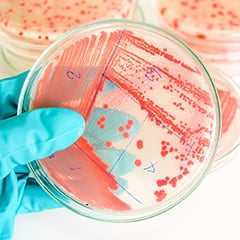
How would he draw attention to water pollution that can’t be seen at all? A friend recommended he collaborate with a laboratory to help gather irrefutable evidence and introduced him to water testing experts from an ALS lab in Europe. The lab was enthusiastic about his project, and ALS offered to sponsor the testing.
In collaboration with the lab team, Rémi planned his second Mediterranean expedition to include sampling sea water for per- and polyfluoralkyl substances (PFAS), a class of potentially carcinogenic microscopic chemicals that had just begun to come under scrutiny for their ubiquity in the environment and in the human body.
Between encounters on the turbulent sea with whales, dolphins, rays and lots of plastic pollution, Rémi gathered 3 water samples to bring back for lab analysis as proof of concept.
The lab discovered in their third test the presence of a common industrial byproduct: perfluorohexanoic acid (PFHxA), a 6-carbon, short-chain PFAS, commonly used as a surfactant and stain-resistant coating. Exposure to PFHxA above certain levels has been linked to adverse health effects to the thyroid, nasal cavity, liver and the developing fetus, so their presence in this idyllic-looking sea was alarming, but there wasn’t enough data to determine the substance’s origin.
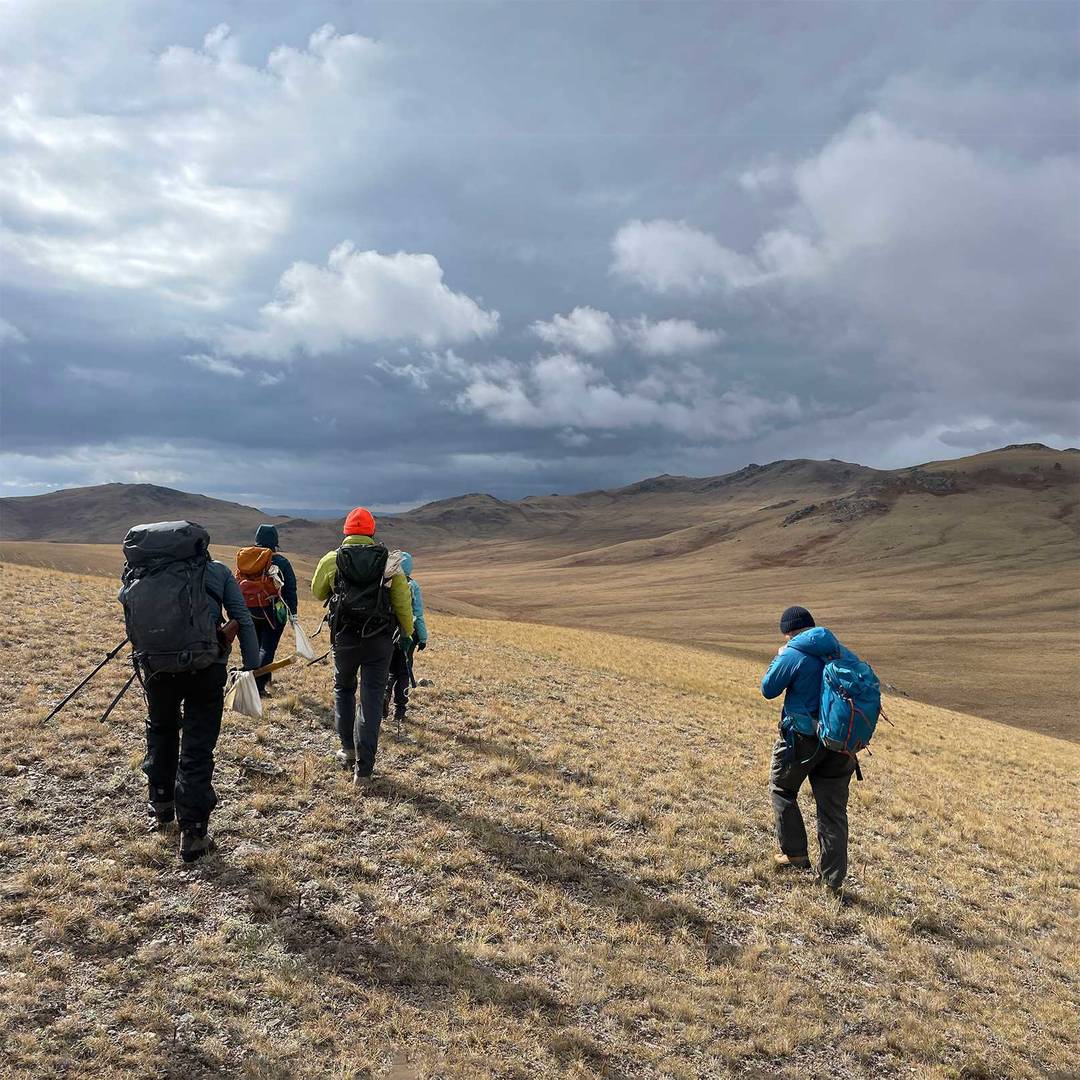
Because of the discovery, Rémi and the ALS team concluded that more could be learned about the prevalence of these ‘forever chemicals’ through more extensive testing – a goal that led to a follow-up expedition: kayaking the entire length of the Rhone River in 2025, from the glacier in Switzerland down to the Mediterranean Sea to fully map and document PFAS in the river.
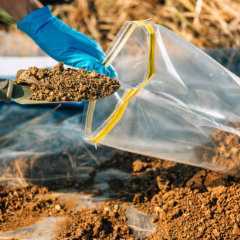
This time he travelled with a team, and collected over 150 samples, which were picked up by ALS technicians every few days at points along the way and brought back to the lab on refrigerated trucks to keep the sample temperature under 5°C.
‘It was so important to have a partner like ALS with the techniques to analyse and compare samples from the glaciers to the sea,’ he explains.
Rémi calls out the specific contributions of Olivier Bonniez, the sampling technician from ALS who helped him with the sampling process.
'I would eventually receive special training in sample testing, but at that point I was new to it,’ Rémi says. 'Olivier helped us at the beginning of the journey to make sure the sampling was done perfectly.
‘He also appreciated being part of an important adventure, helping us map the toxic chemicals in the Rhone River.’
Once the samples were delivered to the lab, they were analyzed for 65 different PFAS, from long-chain to ultra-short chain compounds. Results of the PFAS testing study and a completed documentary film about the project will be released this year.
‘We’ve already posted about the journey online and received more than 10 million views in France alone, so we’re excited about sharing more of the story about the river in the documentary.’
You may be wondering where Rémi is headed next.
Although he led the world’s first-ever Rhone expedition of its kind, he says it’s not that difficult to collect samples near the river.
‘But if you travel closer to Earth’s north and south poles, the environment is so freezing that it's a complex challenge to collect samples and keep them with you,’ he says. ‘That might be the next step: to collect samples where human beings usually don't go.’
‘I think it would be interesting to see what we can find in the remotest ice on the planet.’
Of course, most people would never do what Rémi does. Few of us could. But he describes his endurance adventures as a series of practical challenges – and he views our age’s environmental pollution challenges the same way:
‘People think that we’re in a dark tunnel with no exit. I want to show them that even with PFAS – a terrible problem in Europe and beyond – there are solutions. There are ways to get rid of these invisible types of pollution.
‘When I visit schools and talk to kids, I always tell them that you fight when it’s personal to you. You need to be passionate about something to decide that a situation is not tolerable anymore, and you want to do something about it.’
To learn more about drinking water testing from ALS, contact Frédéric Jeampierre, ALS Managing Director, Environmental, by email at frederic.jeampierre@alsglobal.com or phone +33 7 56 37 24 99
At the time, growing awareness of the presence of microplastics in the environment influenced Rémi to focus his next adventure on water pollution that can’t be seen with the naked eye.
He decided to return to the deceptively clear blue Mediterranean and swim its length from Corsica to Monaco in two weeks with no assistance, just pulling his little floating life platform stocked with the supplies that would enable him to stay alive, such as a desalination device and pump to transform salt water into fresh water.
How would he draw attention to water pollution that can’t be seen at all? A friend recommended he collaborate with a laboratory to help gather irrefutable evidence and introduced him to water testing experts from an ALS lab in Europe. The lab was enthusiastic about his project, and ALS offered to sponsor the testing.
In collaboration with the lab team, Rémi planned his second Mediterranean expedition to include sampling sea water for per- and polyfluoralkyl substances (PFAS), a class of potentially carcinogenic microscopic chemicals that had just begun to come under scrutiny for their ubiquity in the environment and in the human body.
Between encounters on the turbulent sea with whales, dolphins, rays and lots of plastic pollution, Rémi gathered 3 water samples to bring back for lab analysis as proof of concept.
The lab discovered in their third test the presence of a common industrial byproduct: perfluorohexanoic acid (PFHxA), a 6-carbon, short-chain PFAS, commonly used as a surfactant and stain-resistant coating. Exposure to PFHxA above certain levels has been linked to adverse health effects to the thyroid, nasal cavity, liver and the developing fetus, so their presence in this idyllic-looking sea was alarming, but there wasn’t enough data to determine the substance’s origin.
Because of the discovery, Rémi and the ALS team concluded that more could be learned about the prevalence of these ‘forever chemicals’ through more extensive testing – a goal that led to a follow-up expedition: kayaking the entire length of the Rhone River in 2025, from the glacier in Switzerland down to the Mediterranean Sea to fully map and document PFAS in the river.
This time he travelled with a team, and collected over 150 samples, which were picked up by ALS technicians every few days at points along the way and brought back to the lab on refrigerated trucks to keep the sample temperature under 5°C.
‘It was so important to have a partner like ALS with the techniques to analyse and compare samples from the glaciers to the sea,’ he explains.
Rémi calls out the specific contributions of Olivier Bonniez, the sampling technician from ALS who helped him with the sampling process.
'I would eventually receive special training in sample testing, but at that point I was new to it,’ Rémi says. 'Olivier helped us at the beginning of the journey to make sure the sampling was done perfectly.
‘He also appreciated being part of an important adventure, helping us map the toxic chemicals in the Rhone River.’
Once the samples were delivered to the lab, they were analyzed for 65 different PFAS, from long-chain to ultra-short chain compounds. Results of the PFAS testing study and a completed documentary film about the project will be released this year.
‘We’ve already posted about the journey online and received more than 10 million views in France alone, so we’re excited about sharing more of the story about the river in the documentary.’
You may be wondering where Rémi is headed next.
Although he led the world’s first-ever Rhone expedition of its kind, he says it’s not that difficult to collect samples near the river.
‘But if you travel closer to Earth’s north and south poles, the environment is so freezing that it's a complex challenge to collect samples and keep them with you,’ he says. ‘That might be the next step: to collect samples where human beings usually don't go.’
‘I think it would be interesting to see what we can find in the remotest ice on the planet.’
Of course, most people would never do what Rémi does. Few of us could. But he describes his endurance adventures as a series of practical challenges – and he views our age’s environmental pollution challenges the same way:
‘People think that we’re in a dark tunnel with no exit. I want to show them that even with PFAS – a terrible problem in Europe and beyond – there are solutions. There are ways to get rid of these invisible types of pollution.
‘When I visit schools and talk to kids, I always tell them that you fight when it’s personal to you. You need to be passionate about something to decide that a situation is not tolerable anymore, and you want to do something about it.’
To learn more about drinking water testing from ALS, contact Frédéric Jeampierre, ALS Managing Director, Environmental, by email at frederic.jeampierre@alsglobal.com or phone +33 7 56 37 24 99
About ALS Limited (ASX: ALQ)
ALS is a global leader in testing, providing comprehensive testing solutions to clients in a wide range of industries around the world. Using state-of-the-art technologies and innovative methodologies, our dedicated international teams deliver the highest-quality testing services and personalised solutions supported by local expertise. We help our clients leverage the power of data-driven insights for a safer and healthier world.