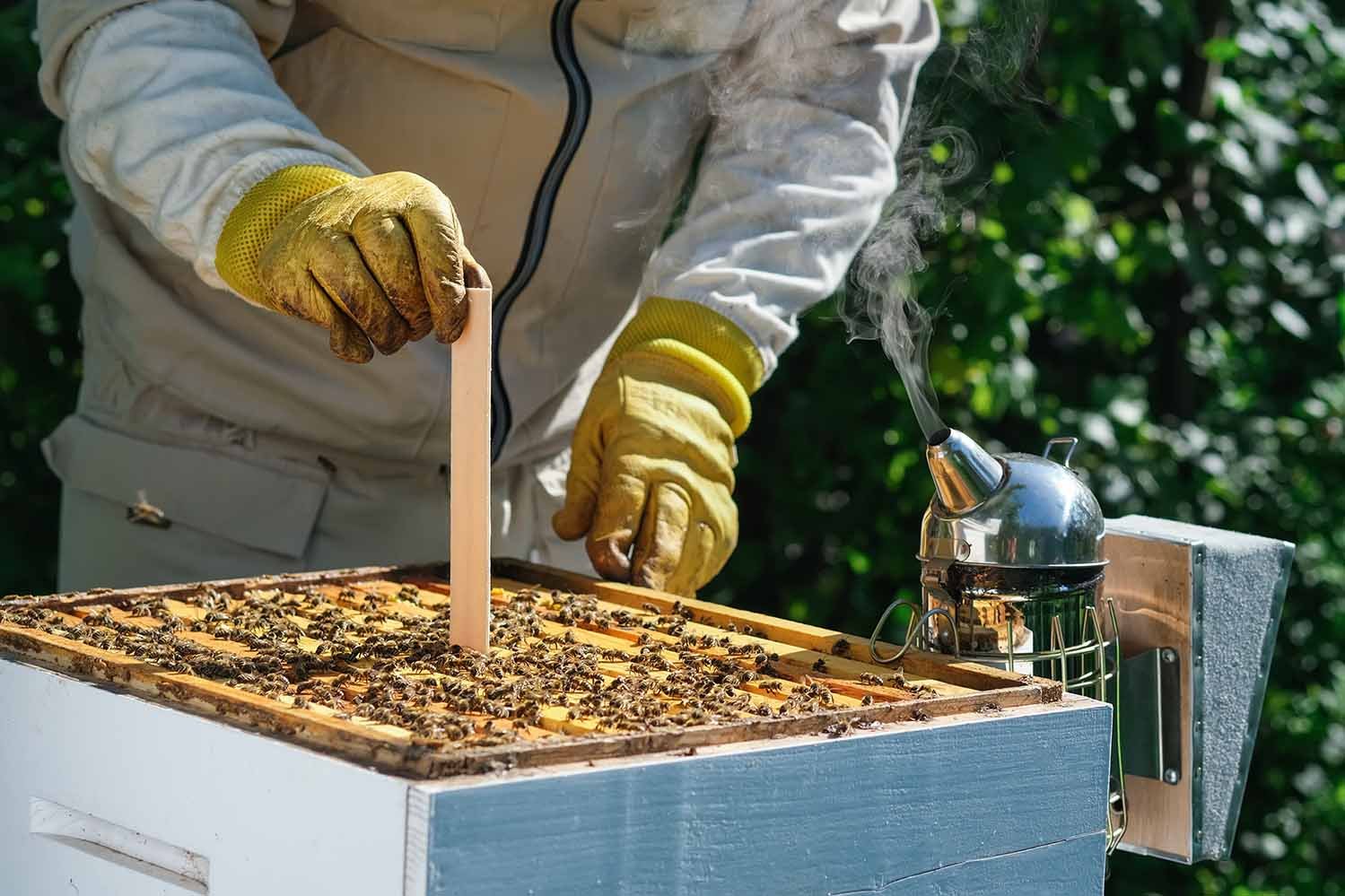
Amitraz breaks down into a series of metabolites in the hive, some of which can be toxic to both bees and humans at high enough levels. There is a higher risk that amitraz and its metabolites will be detectable in honey when strips are left in hives for longer than guideline recommendations or when hives are treated with more than the recommended number of strips. Note, other common miticides such as flumethrin (Bayvarol) and fluvalinate (Apistan) are more prone to accumulate in beeswax rather than honey.
Similar to tutin, there is a domestic and international Maximum Residue Limit (MRL) of 0.2mg/kg for amitraz in honey. There have been international detections of amitraz in the past, creating difficulty getting honey into some markets. Feedback has also been that there has been increasing demand for this testing from overseas markets where this MRL is enforced.
Aside from where requested in domestic and international markets, testing honey for amitraz and its metabolites may be of value to evaluate beekeeping practices and the use of Apivar or Apitraz strips in small or large scale beekeeping operations. It may also be of value to test honey in inventory that may be used in export to countries where this MRL is enforced.
PRICING AND TURNAROUND TIME
Please contact us current pricing and TAT's.
WHY USE ALS?
ALS have a fast turnaround time and competitive price. ALS are able to carry out a number of tests on your honey, which means you can send in one sample and let us take care of the rest.

 Global Website


























 Login
Login