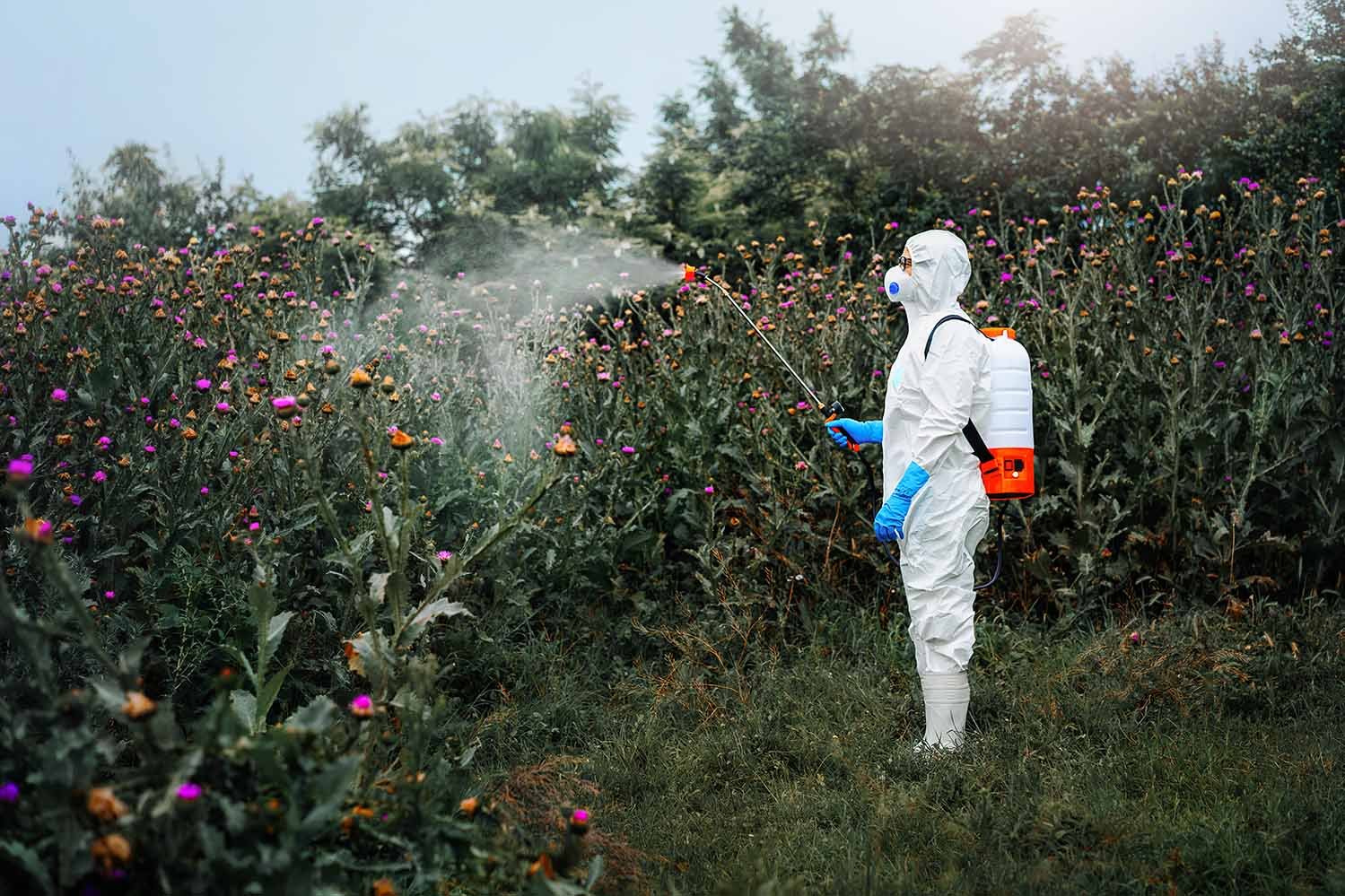
Some countries have shown particular attention to this chemical, enforcing a Maximum Residue Limit (MRL) for honey exported to those countries.
Known Glyphosate Maximum Residue Limits:
- Japan: 0.05 mg/kg
- Europe: 0.05 mg/kg
- New Zealand: 0.1 mg/kg
Aside from where requested in domestic and international markets, testing honey for Glyphosate may be of value to check whether Glyphosate use near hives is contributing to increased levels of Glyphosate in honey from different apiary sites.
ALS method measures Glyphosate, AMPA and Glufosinate in honey. We test for glyphosate to the detection limit of 0.004 mg/kg - well below any requirement needed for export purposes.
As part of our Glyphosate service, you will receive two reports providing you with these significant benefits:
- A standard glyphosate report you can use for export, including for export to Japan.
- A glyphosate trace report which provides a result down to our 0.004 mg/kg detection limit. This can be used to make more accurate blending decisions.
- Reassurance that the honey is likely to comply with regulatory requirements when testing variation is considered, providing some buffer against testing variation is retested (here or overseas)
Explore our articles on Glyphosate published in The New Zealand Beekeeper
HOW DOES ALS CONDUCT THE TEST
Following solvent extraction and FMOC derivatisation, the honey sample is analysed for glyphosate residue using Liquid Chromatograph-Mass Spectrometry (LC-MS/MS).
PRICING AND TURNAROUND TIME
Please contact ALS for current pricing and TAT's.
WHY USE ALS?
ALS have a fast turnaround time and competitive price. ALS are able to carry out a number of tests on your honey, which means you can send in one sample and let us take care of the rest.

 Global Website


























 Login
Login